
Last updated November 15, 2026
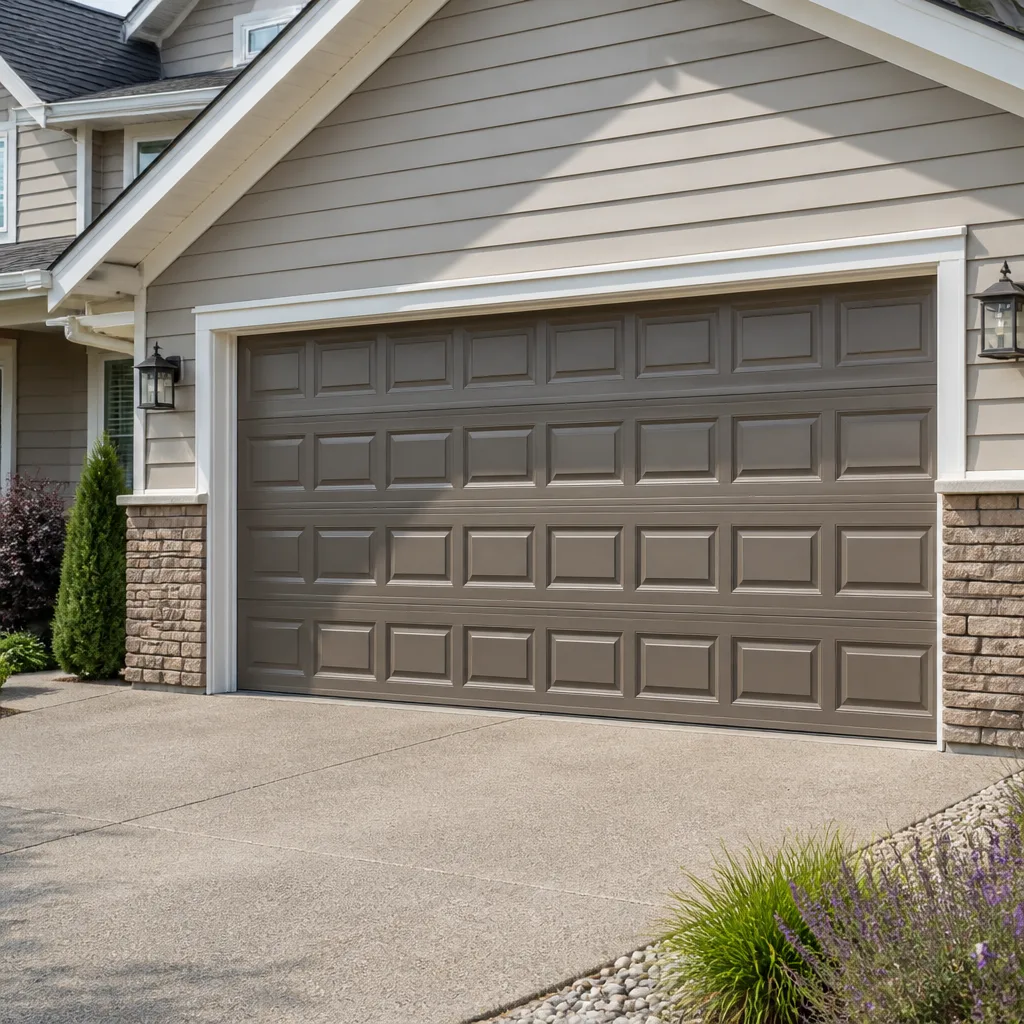 Raised-panel steel
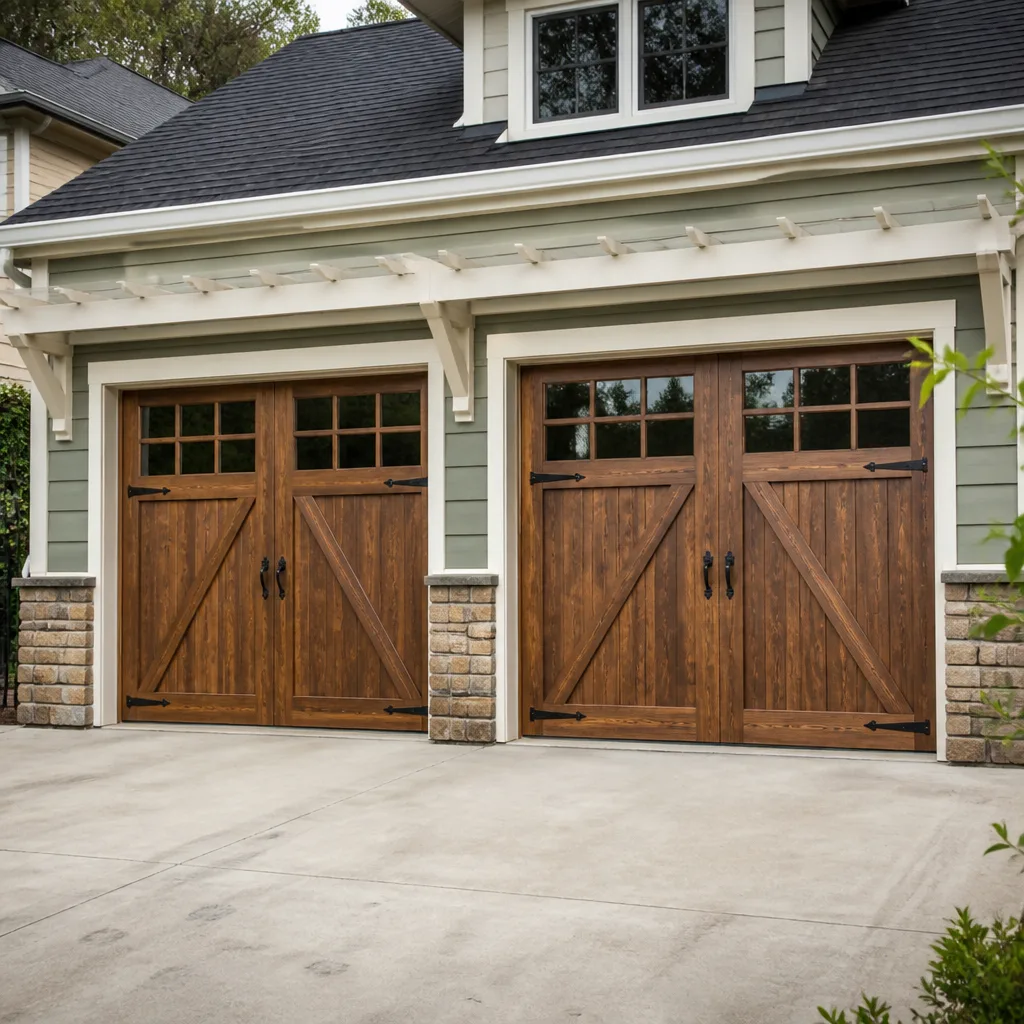 Carriage house
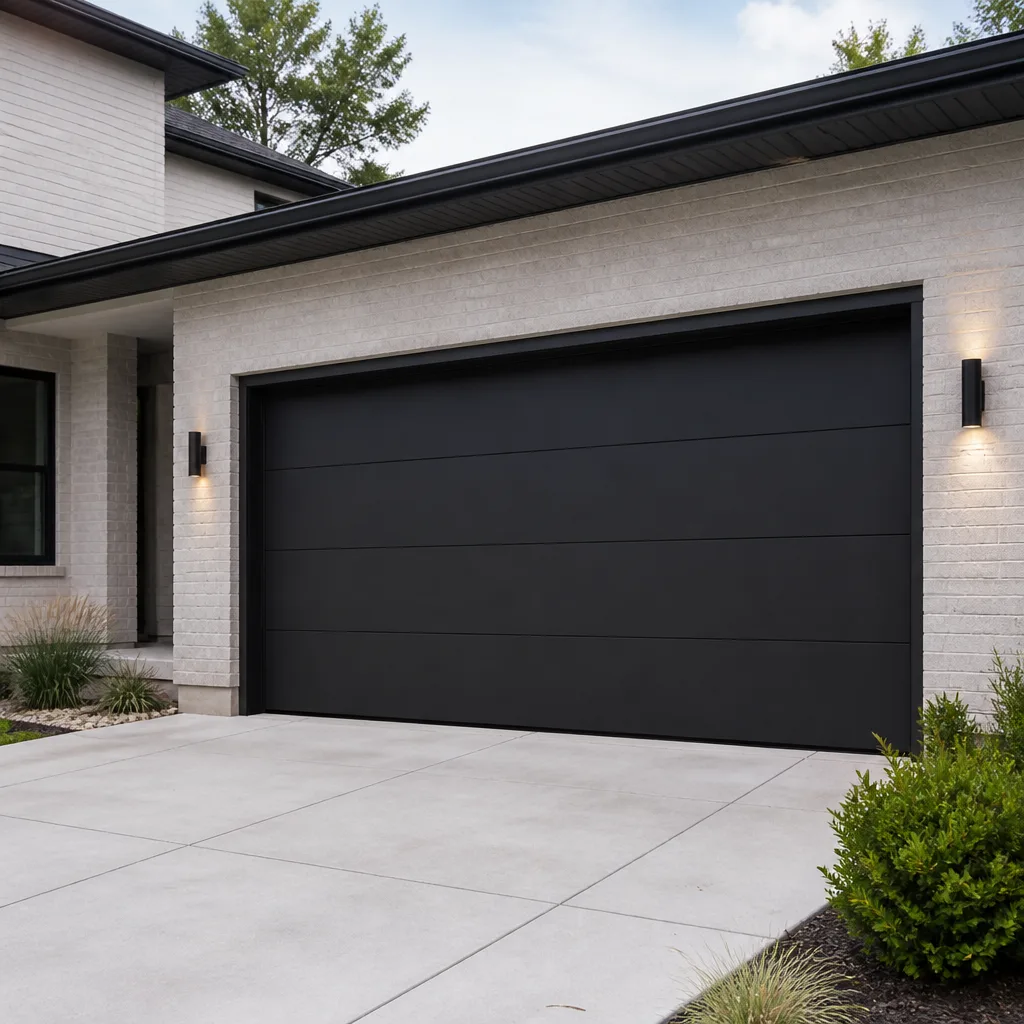 Modern flush
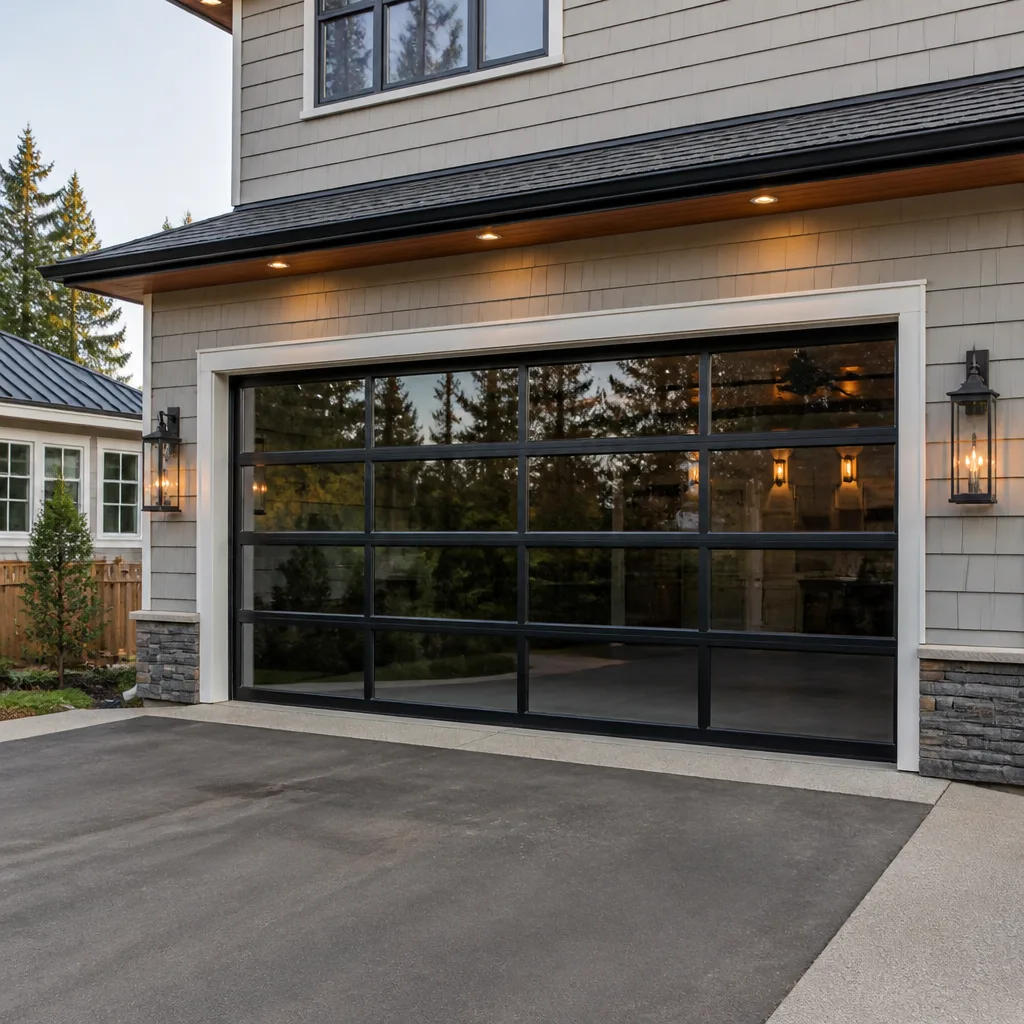 Full-view glass
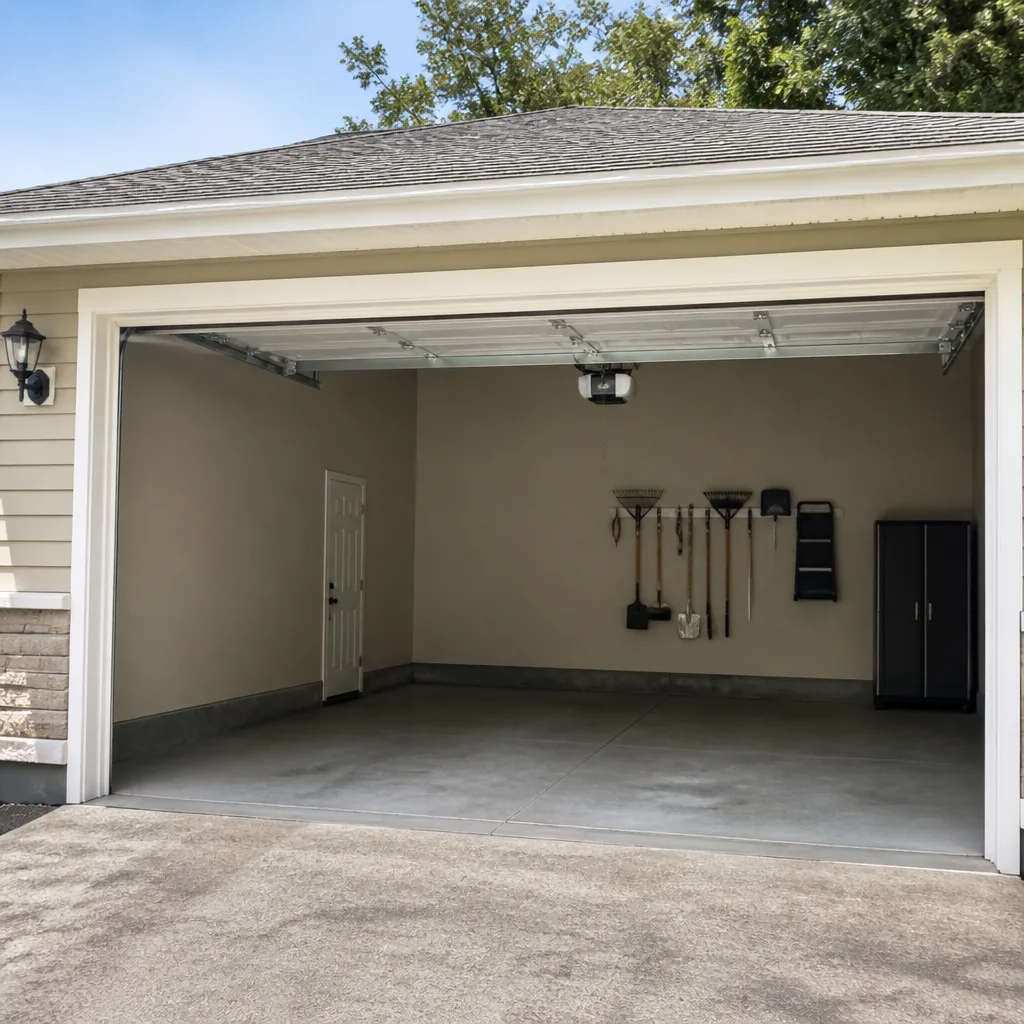 LiftMaster openers
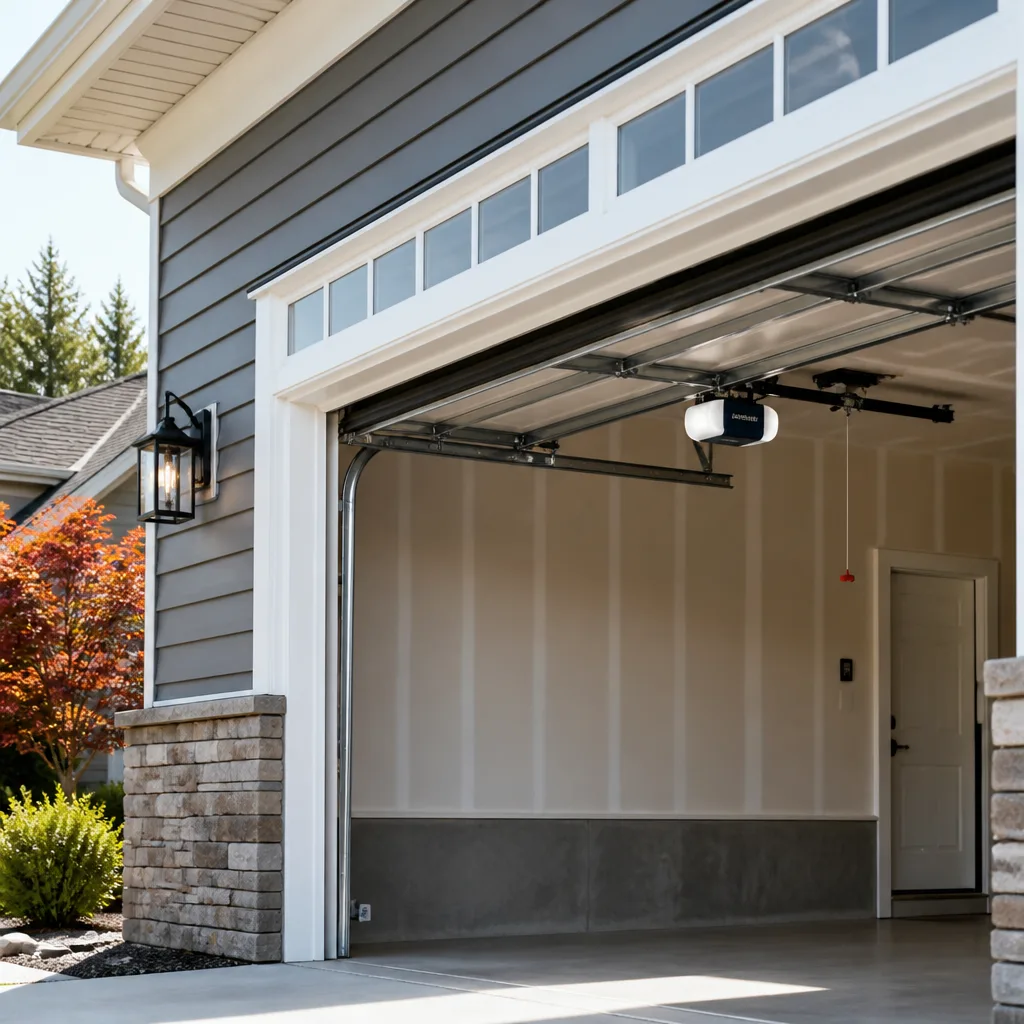 Chamberlain openers
Full 25-point door and opener safety check with every visit - springs, cables, rollers, tracks, and your LiftMaster or Chamberlain opener included
You get a price before we start. It does not change when the pro arrives.
Get your free estimateHow to Hire a Garage Door Contractor in Miramar: A Step-by-Step Guide
Florida does not issue a standalone “garage door contractor” license. That single fact reshapes how you should hire in Miramar. It means the person quoting your door may hold a general contractor, specialty structure, or even a handyman classification, and the law allows some of them to do work that the others legally cannot. Most homeowners never ask which one they’re shaking hands with, which is how a spring swap becomes a permit problem three years later at closing. This guide gives you the exact vetting checklist we use: Florida license types to verify, permit and HVHZ requirements in Broward County, the questions that expose an inexperienced bidder, and how to compare quotes fairly when one includes a wind-rated door and the other doesn’t.
Quick Answer
To hire a garage door contractor in Miramar, verify the license on Florida’s DBPR lookup, confirm who pulls the permit, and ask directly whether the contractor installs to High-Velocity Hurricane Zone (HVHZ) standards before you sign. Get two written estimates that specify door model, wind rating, and permit handling, and never accept a cash-only quote with no license number. A specialist who handles repair, opener diagnostics, and full installation under one roof is easier to hold accountable than a generalist handing off to a framer.
Styles & brands we work with
- Raised-panel steel
- Carriage house
- Modern flush
- Full-view glass
- LiftMaster openers
- Chamberlain openers
Table of Contents
- What license does a garage door contractor need in Florida?
- How do you verify a license before you hire in Miramar?
- Why skipping the permit shifts liability to you
- HVHZ installation: three questions that reveal a bidder’s knowledge
- Storm-season red flags in Broward County
- How to compare a wind-rated quote to a non-rated one
- The contractor worth calling versus the one worth passing on
What License Does a Garage Door Contractor Need in Florida?
Florida doesn’t have a “garage door” license class. The legal path is a licensed general contractor, a certified or registered specialty structure contractor, or a licensed garage door specialty contractor where a local jurisdiction recognizes one. Anything else, including the classic “handyman with a truck,” either can’t legally pull the permit or can’t legally accept the scope. That’s the loophole most homeowners fall through.
The practical split looks like this:
- Certified or registered general contractor (CGC / CGC-registered). Broad authority. Can typically pull permits, subcontract electrical for the opener, and sign off on the whole install.
- Specialty structure contractor. Scoped to structural components attached to buildings. In many Florida jurisdictions this covers overhead doors on commercial and residential structures.
- Registered garage door specialty license. Issued by some local building departments to contractors who install and service overhead doors specifically. This is the tightest fit but it’s local, not statewide.
- Handyman, no certificate of competency. Not a license. Fine for tightening a hinge. Legally unable to pull a permit or handle a structural install.
When we meet a homeowner who’s already collected three bids and can’t tell them apart, the license type is almost always the differentiator. Two of the three will have a valid number. One usually won’t. If you’re already stuck with a door that won’t move, a specialist like Denali Garage Door Repair can diagnose it in a single visit. But before you hire anyone for a new door or a structural repair, demand the license class in writing on the estimate.
How Do You Verify a License Before You Hire in Miramar?
You verify in about four minutes using the Florida Department of Business and Professional Regulation (DBPR) license lookup. The tool is free, public, and pulls the contractor’s license type, status, expiration, and any disciplinary history. It is the single most underused resource in home renovation.
Here’s the exact sequence:
- Ask for the license number in writing before the estimate visit, not after. An honest contractor produces it without hesitation.
- Search the DBPR license lookup online. Enter the number exactly. If the name on the license doesn’t match the company name on the quote, ask why.
- Confirm the license type supports the scope. A door install with a permit requires the right class. A spring replacement may or may not, depending on your jurisdiction. Ask the contractor to confirm which license type covers the job in a written reply.
- Check status and expiration. Inactive, null and void, or expired means no.
- Confirm proof of insurance directly. Ask for a certificate of insurance listing general liability and, if they have employees, workers’ compensation. Call the insurer number on the certificate.
We recommend asking the DBPR question before you mention the door. It reframes the whole call. A contractor who knows their license class cold will rattle it off. One who hem-haws or shifts to “we’re fully insured, don’t worry about it” is telling you the answer. Broward County’s construction industry has a real share of legitimate operators, and a similarly sized share that are, functionally, property-damage waiting to happen. The lookup is what separates them.
One more check: ask whether the license is held by the company you’re hiring or by a separate entity that “works with” them. Subcontracted labor is normal and legal. A straw license is not. If the person on the phone can’t name the license holder, that’s a flag worth taking seriously.
Why Skipping the Permit Transfers Liability to You at Resale
This is the part most homeowners get wrong, and it’s the reason we walk every Miramar customer through it. A garage door install or a structural change (track reconfiguration, header work, opener rewiring that touches home electrical) may require a permit depending on your jurisdiction and scope. When a contractor says “we don’t need a permit, saves you money,” they’re not saving you anything. They’re shifting the liability to you – permanently.
Here’s what actually happens:
- At resale, the inspector flags the unpermitted work. You now own the problem, not the contractor. The door may be functional, but the paperwork trail says the install was never reviewed.
- Insurance claims can be denied if the install wasn’t permitted. Some policies require that structural modifications be permitted. If wind-rated hardware was specified in your policy but installed without inspection, the claim may not pay.
- Warranty support evaporates. A manufacturer that specified installation to code can void coverage if the install wasn’t inspected and documented to standard.
- You may pay twice. Remediation plus a second permit usually costs more than the original install would have.
The rule we follow is simple: ask the contractor to confirm in writing who pulls the permit and whether one is required for your job. Most Florida municipalities require a permit for a garage door replacement. Miramar follows its own building department’s schedule, so call the city’s building department directly with the address and scope. If a contractor pushes back on this, that’s the answer to your hiring question. The permit exists to protect you, and a competent contractor treats it as routine paperwork, not as an optional upsell.
HVHZ Installation: Three Questions That Reveal a Bidder’s Knowledge
Broward County sits inside Florida’s High-Velocity Hurricane Zone. That designation sets the wind-load requirements that any new exterior door system in Miramar must meet, and it’s the single biggest technical gap between a bidder who knows what they’re doing and one who doesn’t. If you ask three questions and get vague answers, you have your answer.
Ask each in this order, over the phone before the estimate visit:
- “What wind rating does the door you’re proposing carry, and what product approval number backs it up?” A genuine HVHZ-qualified installer will name the rating and point to the product approval (often on the Florida Product Approval system or Miami-Dade NOA list). If they say “all our doors are hurricane rated,” push back and ask for the specific rating. “Hurricane rated” is not a standard; there is no such classification.
- “What happens to the installation if the opener is a smart/Wi-Fi model wired into the home network?” HVHZ-qualified installers know that opener electrical and low-voltage cabling are separate from the structural install, and that the panel side is a licensed electrician’s job. A bidder who waves this off is one who’ll run network cable through a door-adjacent hole and call it done.
- “Walk me through how you verify the header and blocking meet the wind load for the door you’re installing.” The honest answer involves reading the product approval, checking the existing framing, and telling you what they find. A bidder who says “it’s all standard, don’t worry” hasn’t looked.
HVHZ standards also shape how the door is anchored, sealed, and reinforced with struts and hardware. A door that meets wind-load on paper can fail inspection if the anchor pattern isn’t installed to the manufacturer’s approval drawing. When you get written estimates, look for the product approval number on each one. If it’s not there, ask for it in writing before you sign. The reason this matters so much in Miramar is simple: the zone designation isn’t a marketing label. It’s the legal minimum for anything that becomes part of the building envelope, and an inspector will reject the job if it isn’t documented to standard.
Storm-Season Red Flags in Broward County
The week before a named storm, or the week after a near-miss, brings out a wave of out-of-state contractors, unlicensed subs, and cash-only quotes in South Florida. They’re legal to operate in many cases, and they’re a bad idea in most. We hear about the fallout every season in Miramar: doors installed with the wrong anchor pattern, openers wired into the wrong circuit, jobs half-finished when the truck leaves the county.
Watch for these, in rough order of how much trouble they signal:
- Out-of-state plates and a phone number that doesn’t answer after the job. Ask where the business license is registered. A Miramar job should be pulled by a company that will still be reachable next month.
- “Cash only, no receipt.” Instant disqualifier. If they’re insured and licensed, they take a check or card.
- Unlicensed subs on the install crew. Ask who actually installs. If the person quoting is not the person installing, and the install crew is unlicensed, you’ve lost the accountability chain.
- No written estimate before work starts. Verbal quotes are unenforceable and prelude to “well, once we opened it up we found…” surprises.
- Pressure to sign that day for a “storm discount.” Urgency sales on a structural product are the opposite of how a specialist operates.
- No product approval number on the quote. In the HVHZ, that’s a tell.
The pace of storm-season hiring is real. Doors do fail during storms, doors do trap cars, and homeowners understandably want a fast fix. But the answer to storm-season urgency is a contractor you’d have hired in February, not the cheapest bidder who shows up the day after the news report. Two hours spent vetting now is worth weeks of remediation later.
How to Compare a Wind-Rated Quote to a Non-Rated One
If one contractor specifies an HVHZ-compliant wind-rated door and another quotes a standard door, they are not quoting the same job. The price gap can look huge – three, four, even five thousand dollars on a double-car install – because they’re not actually the same product. Comparing them on price alone is how a homeowner ends up with a door that fails inspection and can’t be claimed against insurance.
Here’s the checklist for comparing like-for-like:
- Door model and manufacturer. Named on both quotes? LiftMaster and Clopay names on one quote and “premium door” on the other means the second quote is meaningless. Ask for the model number in writing.
- Wind rating. Both quotes should specify a wind-load rating. If one is silent and the other specifies HVHZ-level, you’re being asked to compare two different products.
- Product approval number. Listed on both? If not, ask for it before signing either.
- Anchor pattern and struts. Should be called out in the quote. A non-rated install may skip reinforcing struts that cost extra.
- Opener specification. Which opener brand and model? Does it include battery backup and safety sensors? A Wayne Dalton door with a generic opener is a different system than the same door with a matched LiftMaster unit.
- Permit handling. Named on both? One pulls; the other avoids. Factor the permit cost in.
- Disposal and haul-away. Stated or extra? Small line item, big surprise.
If you’re comparing quotes for a repair rather than a full install, the same logic applies but the price stakes drop. Our garage door repair work in Miramar is quoted per job with the written estimate setting the final price, so the two numbers should line up cleanly. On a new install, the honest way to compare is line by line. If one quote is $1,800 lower, ask what the other quote includes that this one doesn’t. The answer is usually the wind-rated door and permit.
The Contractor Worth Calling Versus the One Worth Passing On
The contractor worth hiring in Miramar does four things without being asked: produces a license number, names the permit process, specifies product approvals on the quote, and installs to HVHZ standard by default. The one to pass on does none of the four and compensates with warmth and urgency.
Beyond the license and permit picture, look for scope breadth. A garage door system has three parts that all wear at different rates – the door and its hardware, the opener and its drive, and the installation as a whole. Many contractors only handle one. When your opener’s logic board fails after the door is a year old, if the installer doesn’t service openers, you’re starting over with a new contractor who has to learn the job.
Look for a specialist with deep familiarity across the brands you actually see in Miramar neighborhoods. LiftMaster and Chamberlain openers, Craftsman systems common in older homes, Clopay, Raynor, Amarr, Wayne Dalton, and Genie hardware. A bidder who says “we only do LiftMaster” is telling you they can’t service half the doors on your street. A bidder who says “we do all of them” without naming any has probably serviced none.
We’re a dedicated garage door specialist, not a general handyman outfit, and that shapes the questions we ask on a first call: what’s the door brand, what’s the opener brand, when did the issue start, does it respond at all or only partially. Your brand. Our expertise. That’s the standard. If a bidder can’t answer those three questions immediately, keep looking.
Common Mistakes to Avoid
- Hiring on price without checking the license. A $400 cheaper quote from an unlicensed bidder is a $4,000 liability later when the unpermitted install surfaces at resale. Always run the DBPR lookup first.
- Letting the contractor skip the permit. The permit exists to protect you, and a licensed contractor pulls it as routine. If your bidder suggests bypassing it, that’s a hiring signal.
- Accepting a quote that doesn’t name the door or opener model. You can’t compare two quotes, and you can’t verify that what arrives matches what you paid for.
- Comparing a wind-rated quote to a non-rated one. In Broward County’s HVHZ, a door without a wind-load rating and product approval is not the same job as one with them. Compare like to like.
- Hiring the storm-season walk-up. Out-of-state plates, cash-only, no written estimate, no license number. All disqualify.
- Ignoring whether the contractor services your opener brand. A door specialist who doesn’t touch openers is half a specialist. Ask which opener brands they service before you hire for anything.
- Assuming the spring is user-serviceable. Garage door torsion springs are under extreme tension. They are not a DIY component, and no honest contractor will walk you through replacing one yourself.
See the difference
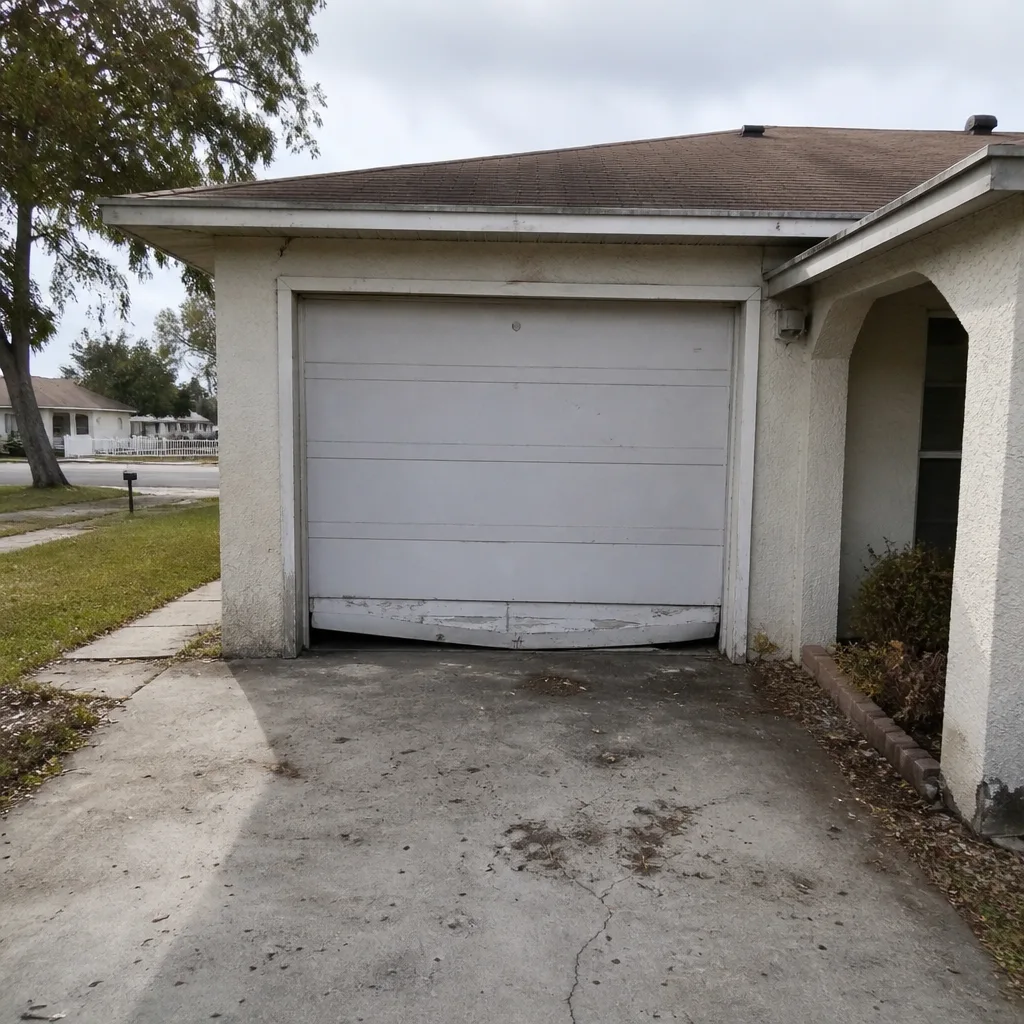 Before
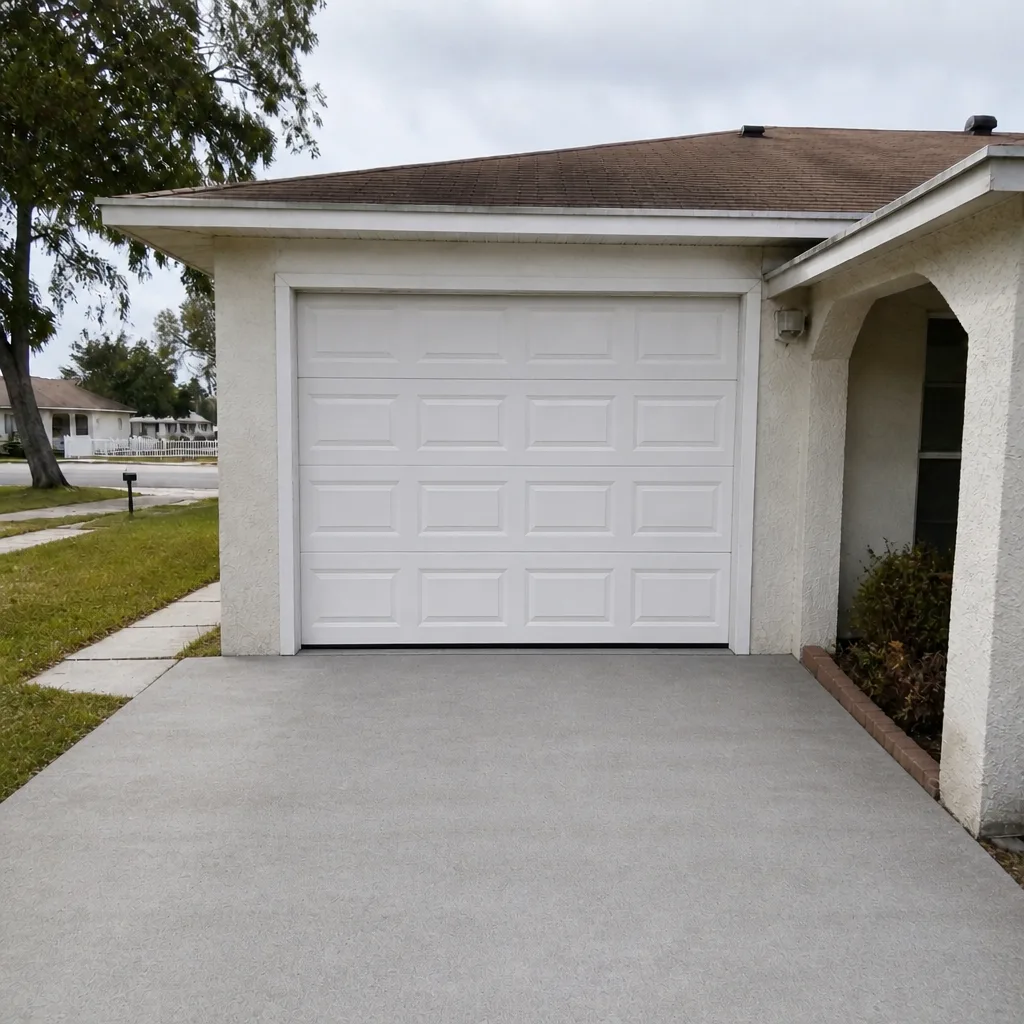 After
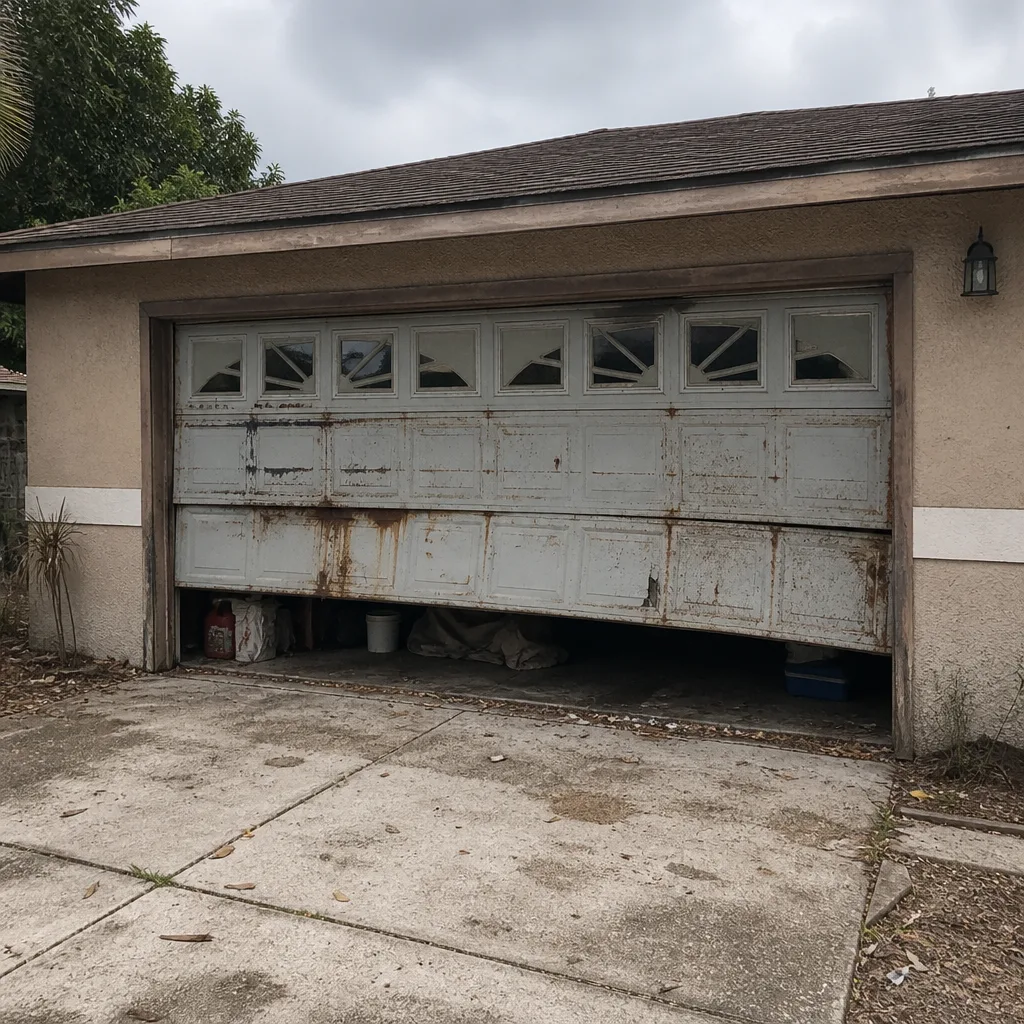 Before
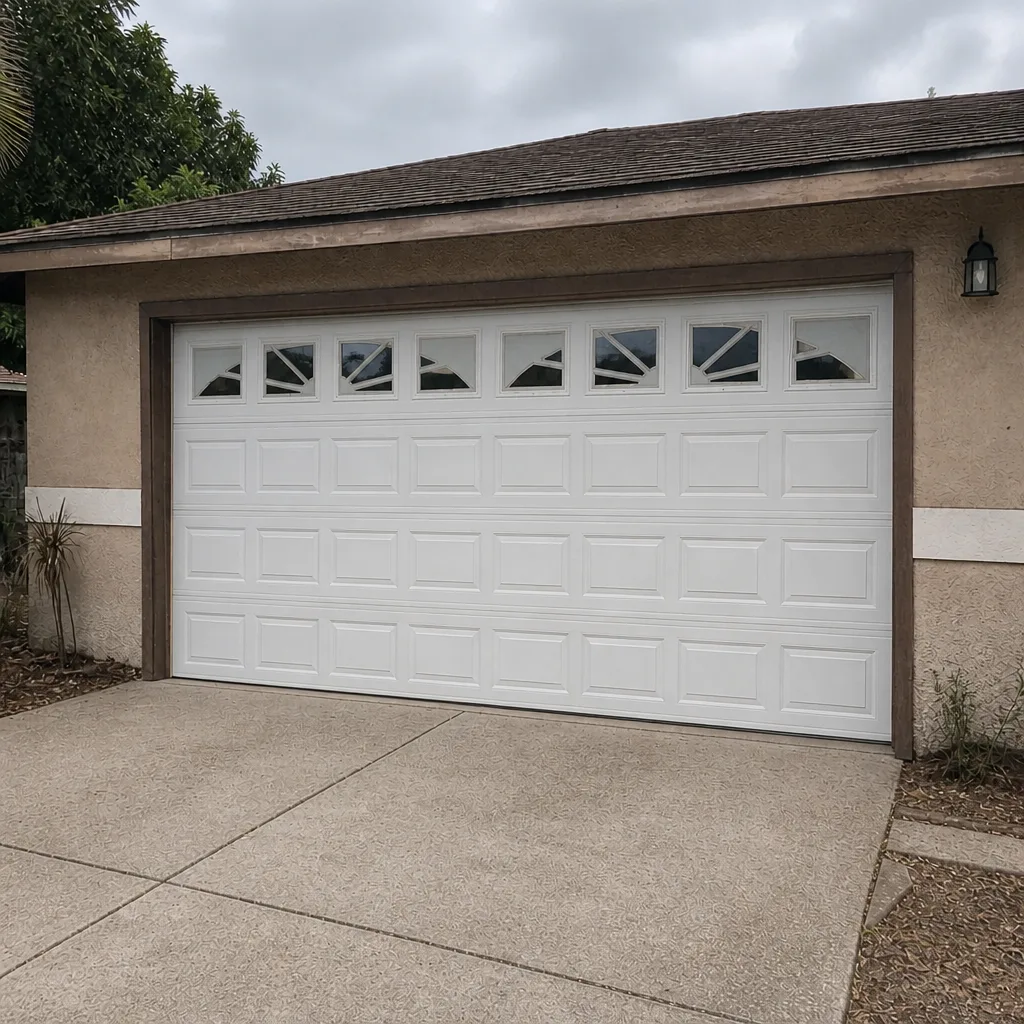 After
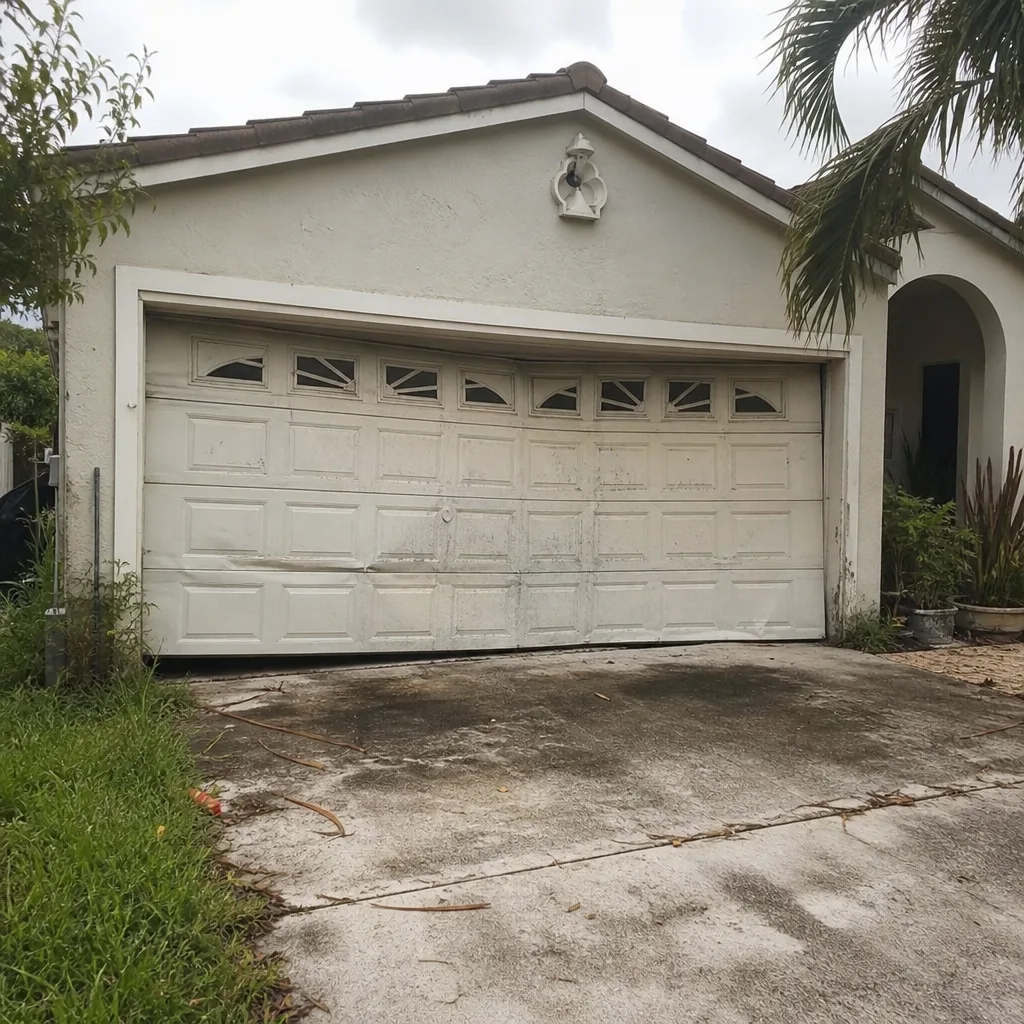 Before
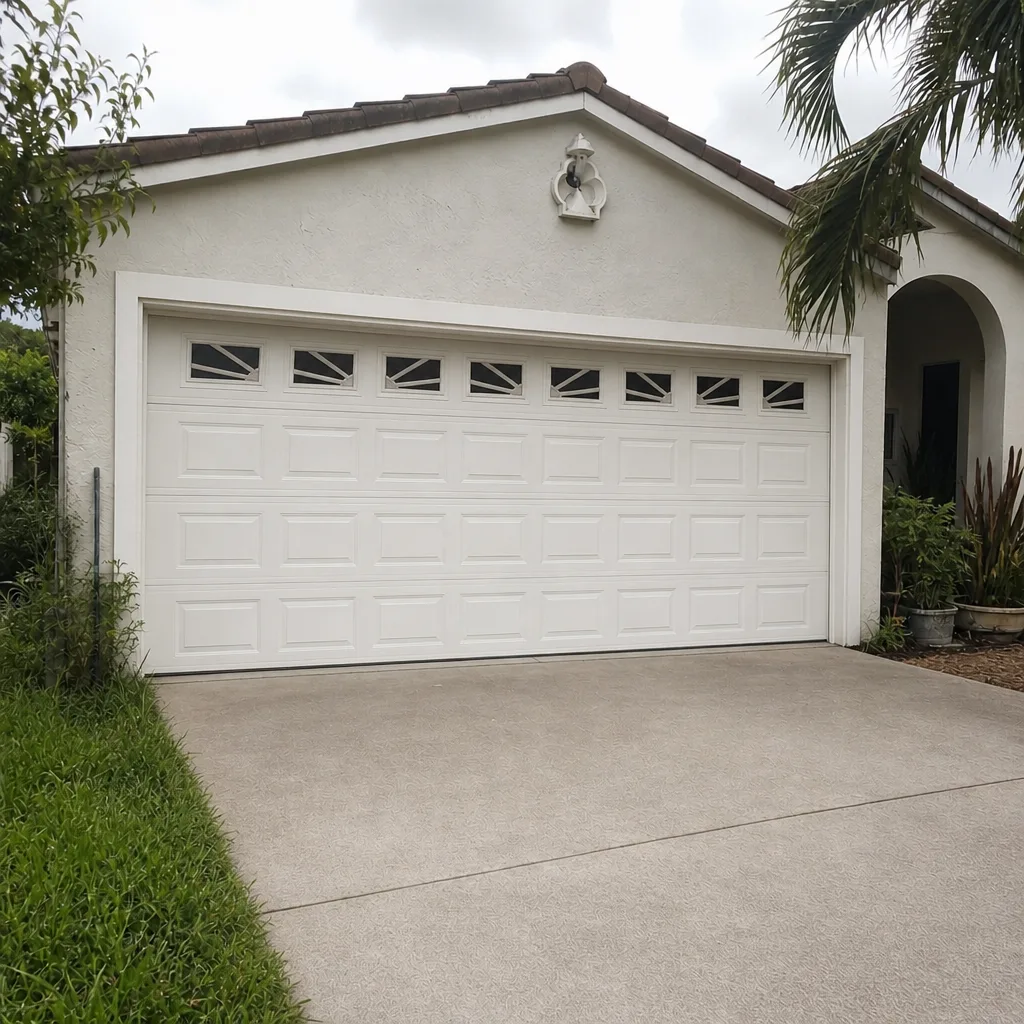 After
When to Call a Professional
Some garage door problems are genuinely a call-a-specialist situation. Torn torsion spring (that metallic snap, then a door that won’t lift) is a spring under fatal tension; do not touch it. A door off its track, bent panel, or opener that adds function to a door that already won’t move is a professional repair, not a YouTube project. Opener logic boards, safety sensor realignments, and smart/Wi-Fi integration work should be handled by someone with opener-specific training, not a door installer who happens to own a multimeter. And any structural install – new door, track reconfiguration, header work – is not the day to experiment with a new contractor you met online. Denali Garage Door Repair offers free estimates in Miramar – call (866) 552-3599. We answer 24/7, and fast dispatch runs 7am-7pm Sunday through Friday. If your door traps a car or leaves the house open to the street, our garage door opener repair and repair services cover both the drive system and the door itself, and your brand is one we know.
Frequently Asked Questions
Yes. Florida requires a valid contractor license – typically a general contractor, specialty structure contractor, or a locally recognized garage door specialty license – to perform structural work and pull permits for a door install. Handymen without a certificate of competency are not licensed for this scope. Verify any bidder’s license number on the Florida DBPR lookup before you sign.
Ask for the license number in writing, then search it in the Florida DBPR online license lookup. Confirm the license type, the status (active), expiration, and disciplinary history. The name on the license should match the company on the quote. For a Miramar job, verify the contractor’s insurance certificate separately by calling the number on the certificate.
Usually yes. Most Florida municipalities, including Miramar, require a permit for a full garage door replacement. Call the city’s building department directly with the address and scope to confirm. Ask the contractor in writing who pulls the permit before work begins – this is a normal part of the job, not an upsell, and skipping it puts the liability on you.
HVHZ stands for High-Velocity Hurricane Zone, and Broward County is inside it. Any new exterior door system in Miramar must meet HVHZ wind-load standards with a documented product approval number. Your written estimate should specify the wind rating and product approval for the door being installed. If it doesn’t, ask for it in writing before signing.
Cost varies by scope, brand, and whether a wind-rated door is specified. A repair is quoted per job with the written estimate setting the final price, and a full install is measured, ordered, and scheduled in advance. Request at least two written estimates that name the exact door model, opener model, wind rating, and permit handling so you can compare like-for-like. Call (866) 552-3599 for a free estimate.
Ask for the license number, confirm who pulls the permit, verify the product approval number for the door they propose, and ask which opener brands they service. A specialist answers all four without hesitation. A bidder who can’t name their license class or the product approval on their own quote is telling you the answer. This is especially important during storm-season hiring when out-of-state walk-ups are common.
The Bottom Line
Hiring a garage door contractor in Miramar comes down to four checks you can run in about an hour. Verify the DBPR license class. Confirm who pulls the permit. Require a product approval number and wind rating on the written estimate. And prefer a specialist who services the door, the opener, and the install, rather than a generalist handling one piece. If a bidder can’t pass all four, keep looking. The Miramar area has enough legitimate operators that you don’t need to take a chance on an unlicensed one, and the liability shift at resale is not a theoretical problem. Do the four checks, and the rest is comparing line items.
At Denali Garage Door Repair, we’re a dedicated garage door specialist – repair, opener diagnostics, and full installation handled by the same team, across LiftMaster, Chamberlain, Genie, Clopay, Amarr, Wayne Dalton, Craftsman, and Raynor. Our technicians have up to 15 years of experience, and we can walk you through the license and permit questions on your first call.
Call (866) 552-3599 for a free estimate. We answer 24/7. Fast dispatch from 7am to 7pm, Sunday through Friday.
Written by the team at Denali Garage Door Repair.