
Last updated November 15, 2026
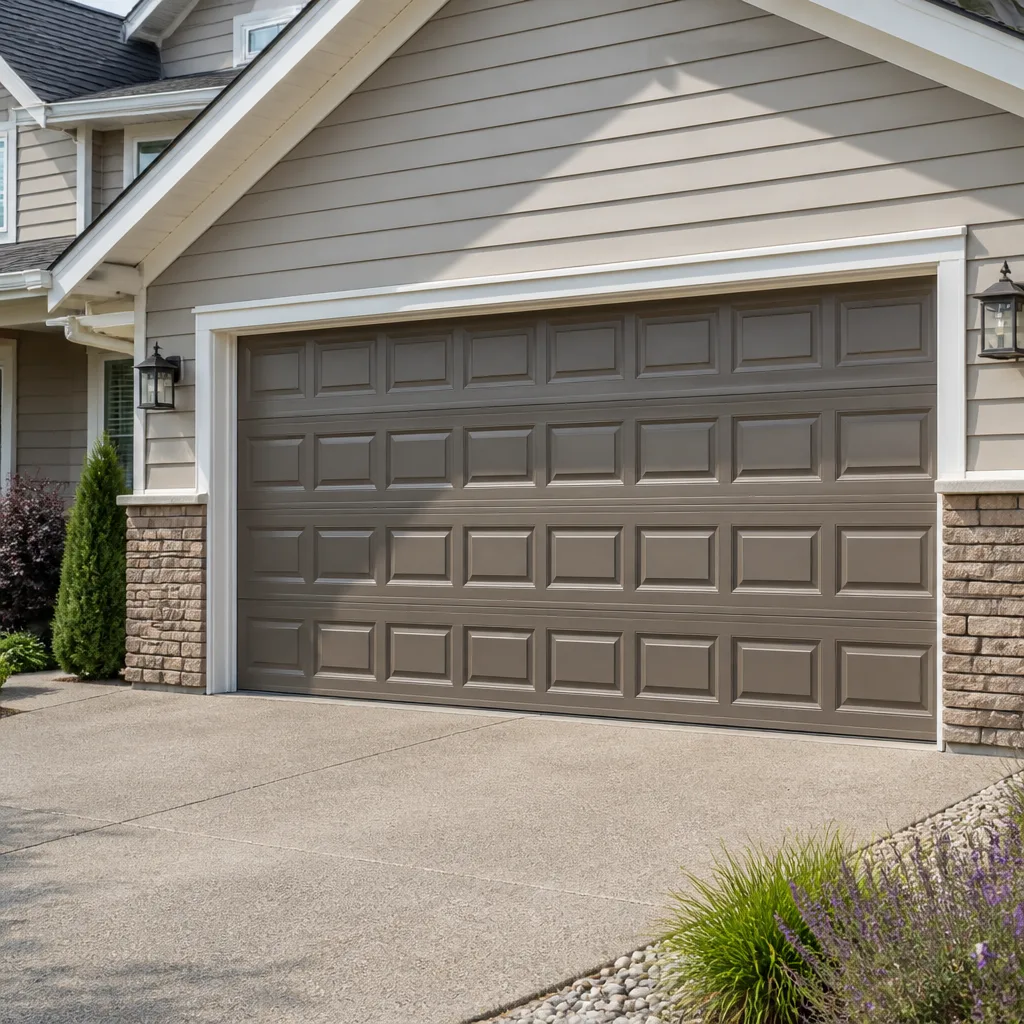 Raised-panel steel
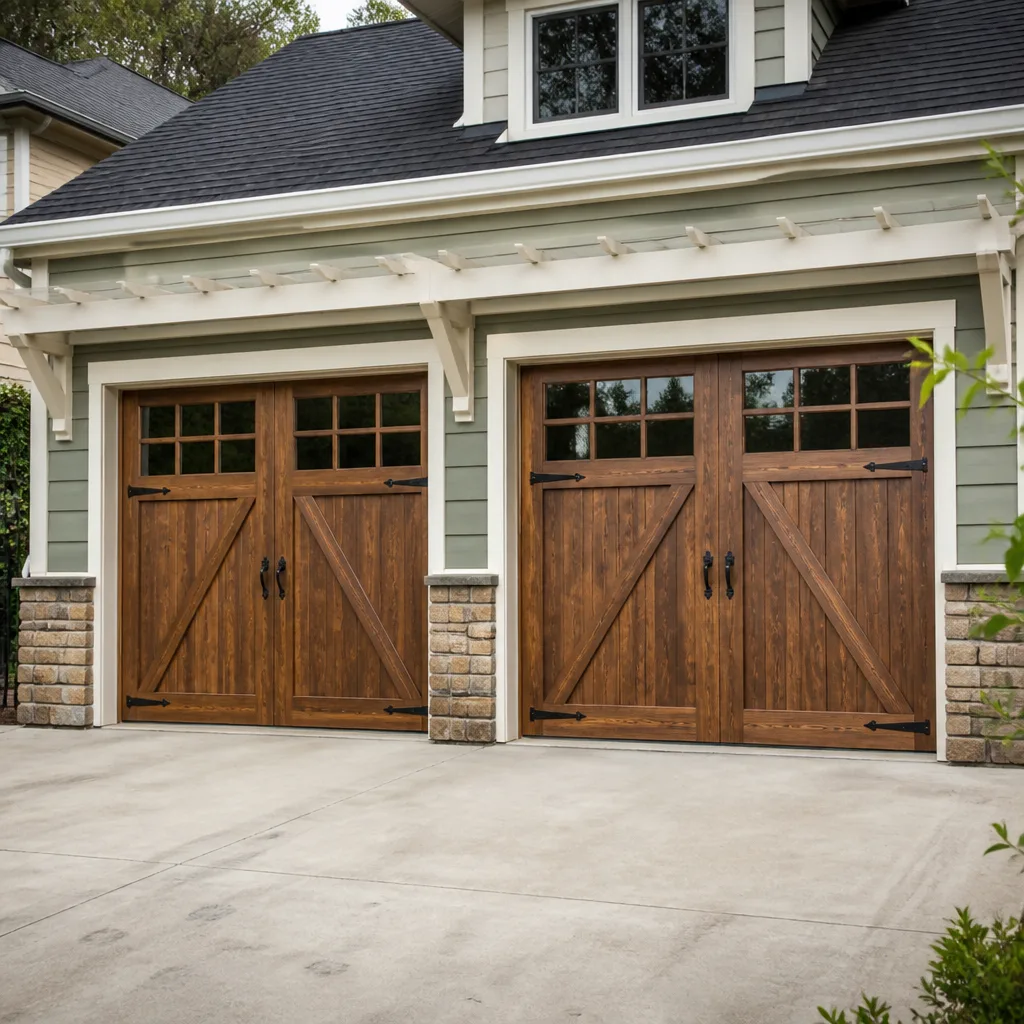 Carriage house
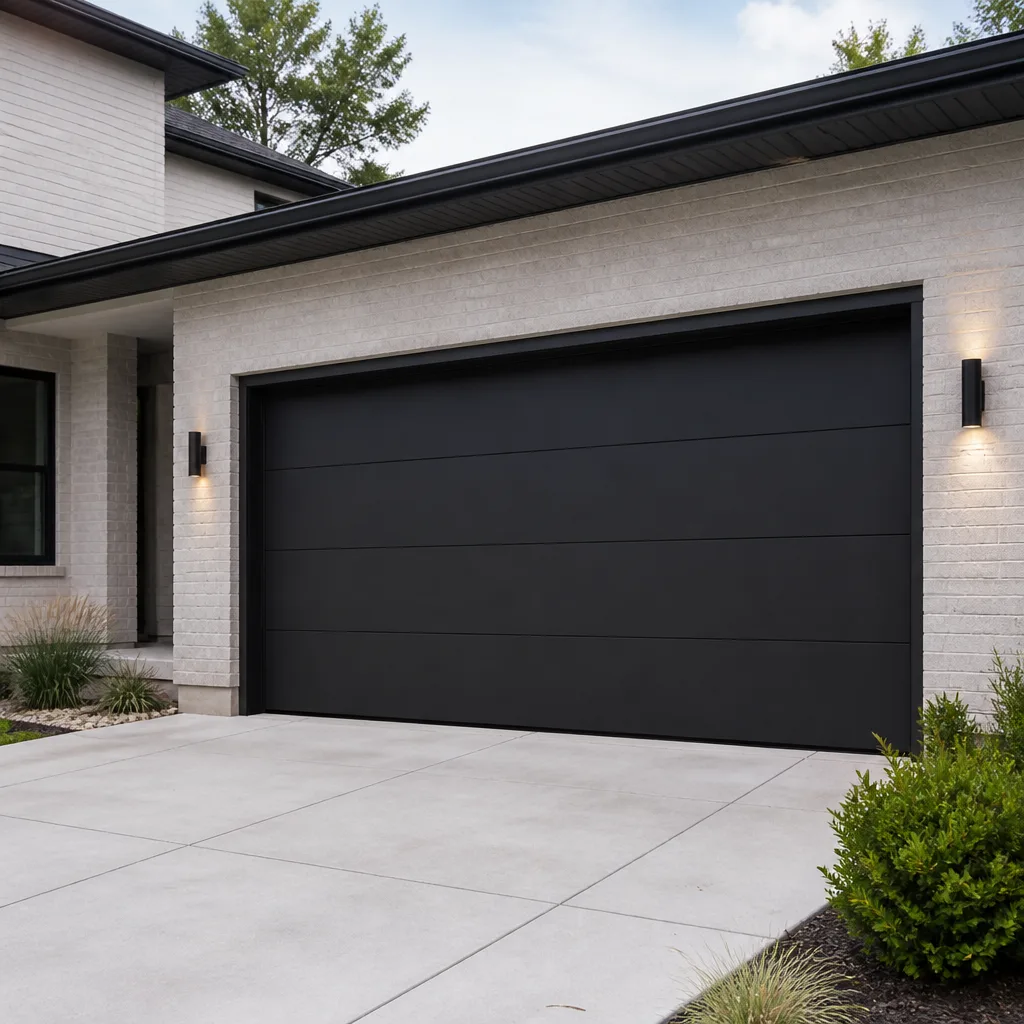 Modern flush
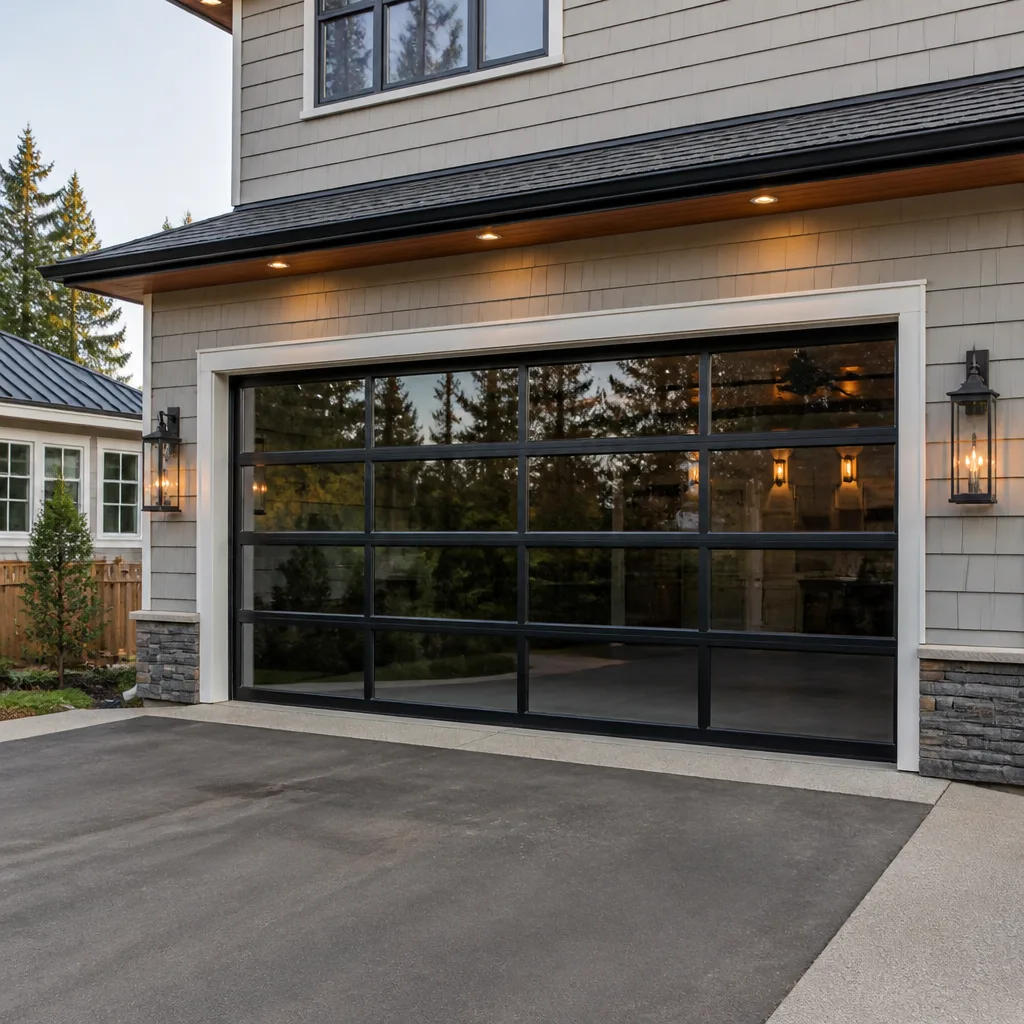 Full-view glass
 LiftMaster openers
 Chamberlain openers
Full 25-point door and opener safety check with every visit - springs, cables, rollers, tracks, and your LiftMaster or Chamberlain opener included
You get a price before we start. It does not change when the pro arrives.
Get your free estimateGarage Door Repair Maintenance Checklist for Miramar Homeowners
A spring rated for 10,000 cycles in a temperate climate can fail in half that time in a Miramar garage that bakes past 130°F in August. That’s thermal fatigue, and it’s why generic maintenance checklists written for Ohio or the Pacific Northwest miss the failure modes that actually matter here. Humidity, relentless UV, and the pressure of hurricane season work on springs, cables, and seals in ways a national-average checklist never addresses. This guide walks you through a maintenance cadence built for South Florida conditions: what to inspect monthly, what to prepare before June 1, how to lubricate for high humidity, and when a door needs a trained specialist rather than a homeowner with a can of spray.
Quick Answer
Aim to inspect your garage door monthly, lubricate the springs, hinges, and rollers every three to four months with a silicone-based or lithium grease product (never standard WD-40), and run a full pre-hurricane-season inspection before June 1 covering panels, bottom seals, and horizontal tracks. In Miramar’s heat and humidity, springs and weather seals wear faster than national averages, so a spring rated for 10,000 cycles can reach the end of its life sooner than the label suggests. Balance testing once a month catches most mechanical problems before they become a door that won’t open.
Styles & brands we work with
- Raised-panel steel
- Carriage house
- Modern flush
- Full-view glass
- LiftMaster openers
- Chamberlain openers
Table of Contents
- What Should You Check on Your Garage Door Every Month?
- How Do You Run a Balance Test, and What Counts as a Pass or Fail?
- What Should You Inspect Before Hurricane Season in Miramar?
- How Do You Spot UV-Degraded Weather Stripping?
- What’s the Right Lubrication Schedule for High-Humidity Climates?
- Where Does Rust Attack First in Coastal Broward County?
- What Does Opener Maintenance Actually Involve?
- When Should You Call a Professional?
What Should You Check on Your Garage Door Every Month?
A monthly walk-through takes about five minutes and catches the problems that lead to a door stuck in the open position with a car trapped inside. In Miramar, the monthly check matters more than in cooler climates because heat accelerates wear on every moving part. Here’s the sequence we recommend, and it applies whether you own a Clopay steel door or a Wayne Dalton model with a LiftMaster opener overhead.
- Open and close the door once and listen. Grinding, squeaking, or a rattling sound signals worn rollers, a dry spring, or a loose hinge. You want to hear the motor and nothing else.
- Check the balance using the procedure below. A door that won’t hold halfway up is out of balance.
- Inspect the bottom seal and side seals for cracks, gaps, or a hard, brittle feel. Seal failure lets humidity and rain into the garage.
- Look at the springs above the door. A visible gap in a torsion spring means it has broken. Do not touch it. Call a technician.
- Test the safety reverse. Place a 2×4 flat on the ground in the door’s path and close it. The door should reverse on contact.
- Check the photo-eye sensors at the base of the tracks. Wipe them clean and confirm the LED indicator on each stays lit.
- Scan the hardware for rust spots, loose bolts, and worn cables. Note anything that looks off.
The Miramar sun and humidity work on your door 365 days a year, so these checks aren’t busywork. They’re how you catch a worn roller or a degrading seal before it fails during a storm.
How Do You Run a Balance Test, and What Counts as a Pass or Fail?
A balance test checks whether your door’s spring tensions match its weight, and it’s the single most useful diagnostic a homeowner can run. A balanced door stays in place when you release it halfway open. A failing one drops or rises on its own.
To run the test:
- Close the door and disconnect it from the opener using the manual release cord.
- Lift the door by hand to the halfway point.
- Release it gently and step back.
A pass looks like this: the door stays put, or drifts less than a few inches. You have to push it up or down by hand to move it.
A fail looks like this: the door drops to the floor, sags downward, or drifts upward on its own. Either direction means the springs are out of balance or nearly worn out.
A failing balance test is not a DIY fix. Torsion springs are under extreme tension, and adjusting or replacing them without the right tools is one of the most dangerous jobs in the home. That’s a call-in-a-specialist moment. If you’ve run the test and it fails, our garage door repair team can diagnose it and give you a written estimate before any work begins. Run the balance test monthly – in Miramar’s heat, springs that were fine last summer can go out of balance faster than you’d expect.
What Should You Inspect Before Hurricane Season in Miramar?
By June 1, your garage door should be checked for structural integrity, seal condition, and track alignment – because the garage door is usually the largest and weakest opening on a Broward County home. A pre-season inspection of the panels, bottom seal, and horizontal tracks will catch the weaknesses that wind and wind-driven rain expose.
Here’s the pre-hurricane-season protocol we recommend every Miramar homeowner follows:
- Panels: Look for dents, buckling, or separation at the seams. A panel that flexes under hand pressure won’t hold against wind load. Rust along a panel edge is a weak point.
- Bottom seal: Run your hand along the seal where it meets the floor. It should be flexible and make full contact all the way across. A stiff or cracked seal lets water under the door.
- Horizontal tracks: Check that the horizontal sections are level and that the bolts holding them to the framing are tight. A track that’s out of alignment lets the door come out of its rollers under stress.
- Hinges and rollers: Confirm every hinge is tight and every roller turns freely. A seized roller will fail under the extra load of a door being pushed by wind.
- Panel bracing: Look at the vertical stiles and the back of the panels for any signs of flex or separation at the hinge points.
Proper wind-rated doors and braces are a real consideration on this side of South Florida, and the requirements vary by municipality and door model. If you’re unsure whether your current door meets local code, the right move is to ask your city’s building department directly. We’re happy to inspect the door and tell you what condition it’s in – but permit specifics are the building department’s call. Getting the inspection done before June 1 gives you time to fix problems rather than scrambling in the middle of a storm watch.
How Do You Spot UV-Degraded Weather Stripping?
Miramar’s sun exposure degrades rubber and vinyl weather stripping faster than almost anywhere else in the country. A seal that looks fine on the outside can be brittle and cracked within a few years of direct sun exposure. The signs to look for:
- Cracks or crazing along the outer edge of the seal, where the sun hits hardest.
- A hard, board-like feel when you press the seal. Fresh weather stripping has give; degraded stripping does not.
- Gaps at the corners where the bottom seal meets the side seals, or where the trim meets the door.
- Water intrusion inside the garage after rain, especially near the door threshold.
- Daylight visible under the door when it’s closed in a dark garage.
- Discoloration or a chalky surface on rubber that has oxidized under UV.
The fix is simple and inexpensive: replace the weather stripping. What matters is catching the failure early. A degraded bottom seal doesn’t just let in rain – it also lets in humidity, which accelerates rust on hinges and rollers, and lets in insects and small animals. Left long enough, a bad seal can also let water pool at the base of the door and start corroding the bottom panel. If your seals are past their prime, replacing them is one of the highest-value small maintenance jobs you can do on a Miramar garage. It’s also a job the manufacturer of your door can support – whether that’s Clopay, Amarr, or another brand – and any competent door specialist should be able to source the correct replacement strips.
What’s the Right Lubrication Schedule for High-Humidity Climates?
In a high-humidity climate like Miramar’s, lubricate the torsion springs, hinges, and steel rollers every three to four months with a silicone-based spray or a white lithium grease – not standard household WD-40, which is a solvent, not a long-term lubricant, and can attract dust and grime. Nylon rollers don’t need lubrication at all.
Humidity changes the lubrication picture in two ways. First, moisture in the air can wash away lighter lubricants over time, so a schedule that works in a dry climate leaves parts dry here. Second, the wrong product can make things worse. Avoid anything labeled as a general-purpose penetrating oil – those are designed to break down rust, not to lubricate long-term, and they evaporate quickly in heat. And avoid anything containing a tackifier that creates a sticky film, because that film traps grit and dust. Fine grit in your track or hinge is like sandpaper on every cycle.
Here’s the lubrication routine:
- Springs (torsion): Spray a light coat along the coil. Do it when the door is closed and the spring is under tension, but keep hands and fingers away from the coil itself.
- Hinges: One spray at each hinge pivot point, then open and close the door once to work it in.
- Steel rollers: A drop on the bearing of each roller. Don’t overdo it – excess lubricant attracts dust.
- Track: Do not lubricate the vertical or horizontal track. It should stay clean and dry. Wipe it down with a dry cloth if you see buildup.
Some products are marketed specifically as mold-resistant. In a Miramar garage, that matters. Anything that leaves a film that stays damp is a bad idea. Stick with silicone or lithium grease – both are stable in heat and humidity and won’t harbor growth. Mark your calendar: if you last lubricated in spring, the next pass is due by early summer, and again before the fall.
Where Does Rust Attack First in Coastal Broward County?
Rust is a driven-in problem in coastal Broward County, and the parts that fail first are the ones exposed to moisture and salt-laden humidity on a daily basis: hinges, rollers, and the spring anchor plate. The bottom panel of the door and any spot where paint has chipped also go fast.
In a Miramar garage, the humidity and warm air mean any bare metal is a corrosion site. Look for rust in these spots:
- Hinges: The pivot points and the mounting holes are prime. A brown stain or flaking metal on a hinge means it’s time to replace it.
- Rollers: Steel rollers develop a rough surface as they rust, which then drags on the track. If a roller turns roughly when you spin it, it’s already on its way out.
- Spring anchor plate: This is the plate on the wall above the door where the torsion springs attach. Rust on the anchor bolts is a serious sign – that plate holds the entire spring system.
- Bottom panel edge: Water pools there and stays. Any bubbling paint or orange staining along the lower edge of the bottom panel is early rust.
- Track brackets: The brackets that hold the track to the wall rust at the mounting points, especially in older Miramar homes.
A light coat of lubricant on hinges and rollers is the prevention side, but once rust has set in on a critical component, replacement is the right answer. A rusted hinge is cheap and easy to swap. A rusted spring anchor plate is a safety issue, and the door should come off the springs until it’s addressed. That’s a job for a technician – a trained pro can inspect the full hardware set and tell you what can be saved and what has to go. And because we work with the major door brands – from Genie opener systems to Wayne Dalton door hardware – we can source the correct replacement parts for your setup.
What Does Opener Maintenance Actually Involve?
Opener maintenance is about the motor, the drive system, and the safety sensors, and it’s a task most homeowners skip until something breaks. A LiftMaster, Chamberlain, Genie, or Craftsman opener that’s well-maintained will run for years; one that isn’t can fail in the middle of a busy week. The openers themselves are designed to be low-maintenance, but three things need attention:
- Force setting: The opener has a force adjustment that controls how much pressure it applies before reversing. Test it monthly using the 2×4 method on the floor. If the door doesn’t reverse, the setting needs adjustment.
- Safety sensors: Wipe down the photo eyes every month. Make sure the indicator lights stay solid. A misaligned or dirty sensor is the single most common reason a door won’t close.
- Drive system: Listen for the difference between normal and abnormal. A belt or chain that starts to rattle, or a screw-drive opener that groans, needs attention. Most openers have an adjustment for the chain or belt tension, and it’s a small job – but it needs doing before the drive fails.
Smart and Wi-Fi-enabled openers add a layer of diagnostics you can use. Many of them log cycle counts and error codes, so you can see how often the door is cycling and whether it’s hitting its limits. If your opener is reporting errors or behaving inconsistently, our garage door opener repair team can diagnose whether the problem is the motor, the logic board, or the door itself. Very often it’s not the opener at all – a binding door or a worn roller is the real cause, and the opener is just the messenger.
Common Mistakes to Avoid
- Using WD-40 as a lubricant. WD-40 is a solvent and water displacer, not a long-term lubricant. In a Miramar garage, it evaporates quickly and leaves parts dry. Use silicone spray or white lithium grease instead.
- Adjusting springs yourself. Torsion springs are under massive tension and can cause serious injury. If your balance test fails or you see a gap in the spring, do not attempt the fix. Call a trained technician.
- Ignoring the balance test. A door that drifts when you release it halfway up is telling you something. A door that fails the balance test for a month is already working its opener overtime.
- Skipping the pre-hurricane-season inspection. In Broward County, June 1 shouldn’t pass without a check of the panels, bottom seal, and tracks. A door that’s fine in calm weather can fail under storm load.
- Using the wrong replacement rollers. Cheap replacement rollers may not match the door’s weight and can fail inside a month. Match the roller type and load rating to the door.
- Letting the bottom seal go. A cracked or stiff seal lets in water and humidity, which drives rust through hinges and rollers. It’s one of the cheapest fixes you’ll make on a Miramar door.
- Assuming the opener is broken when the door is the issue. A straining opener is often a symptom of worn rollers, a misaligned track, or a dry hinge – not an opener failure. Diagnose the door first.
See the difference
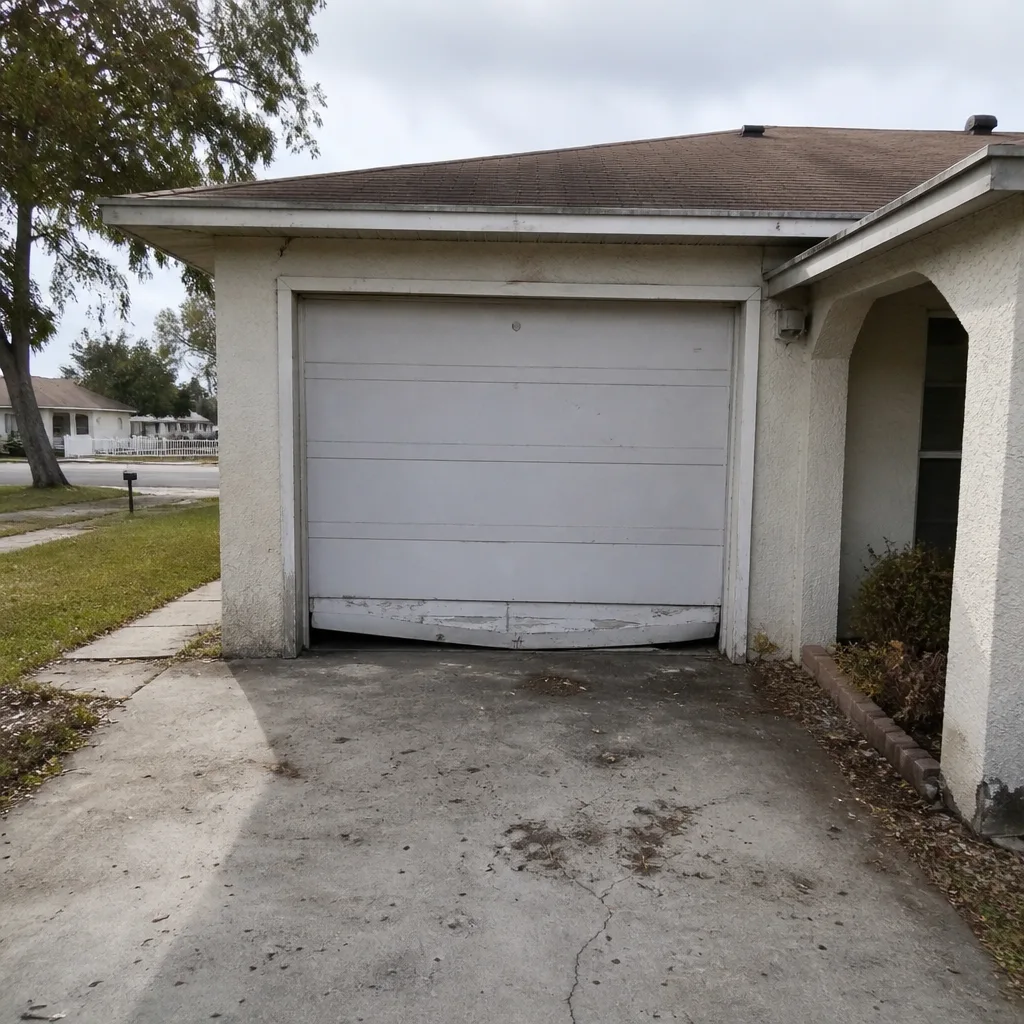 Before
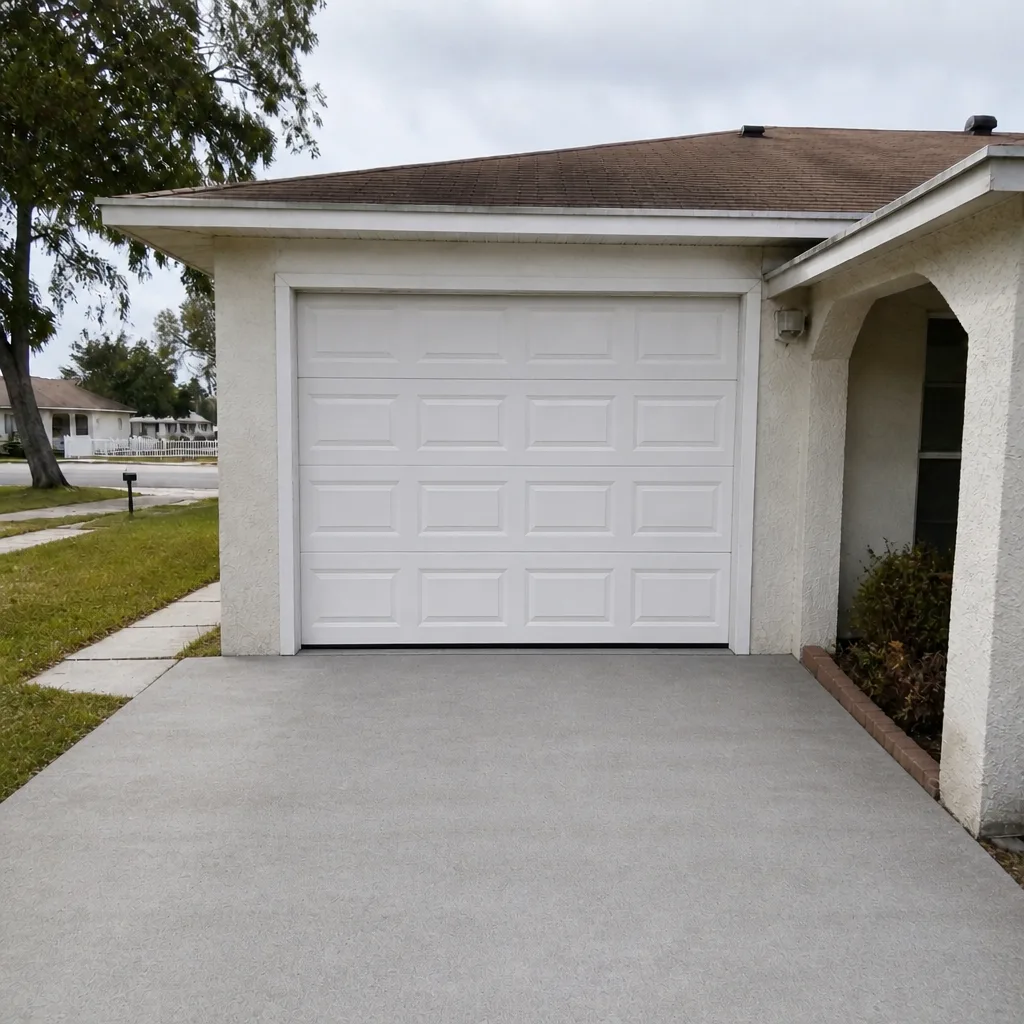 After
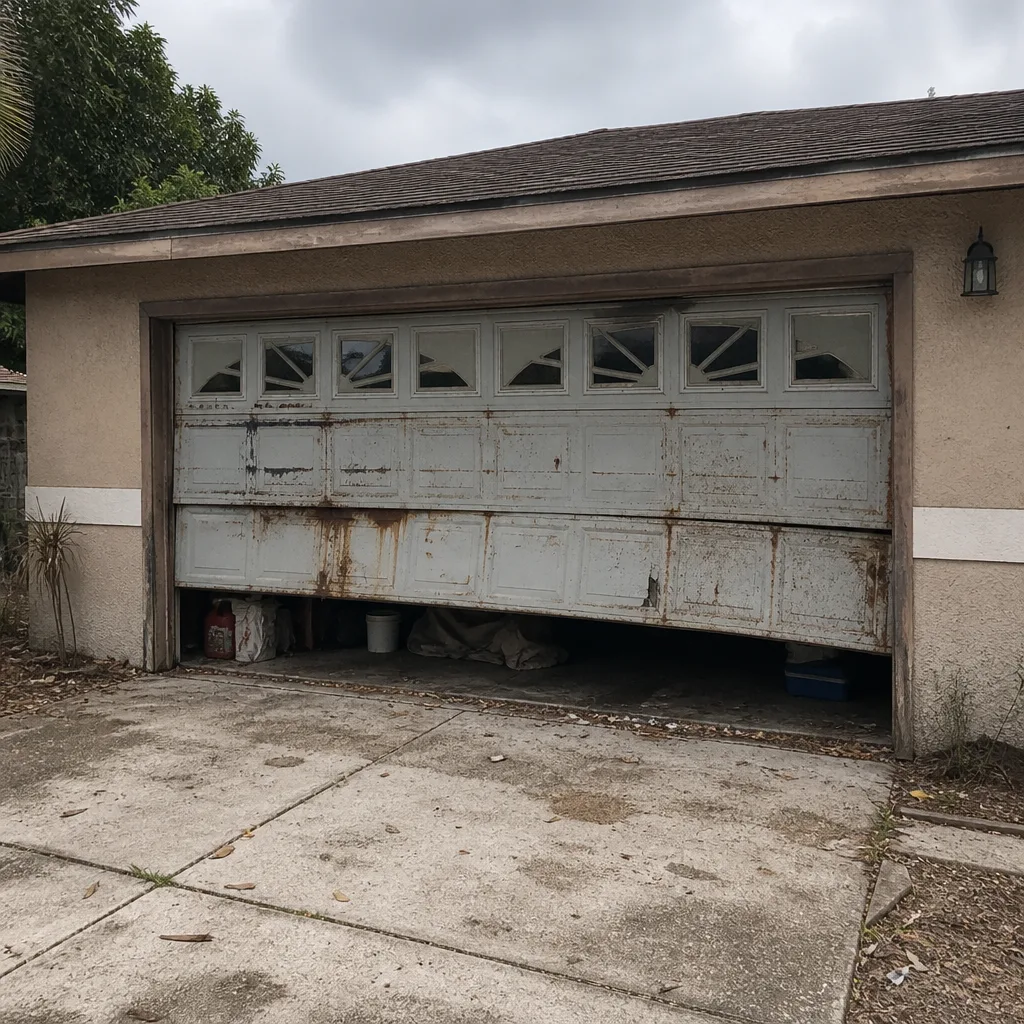 Before
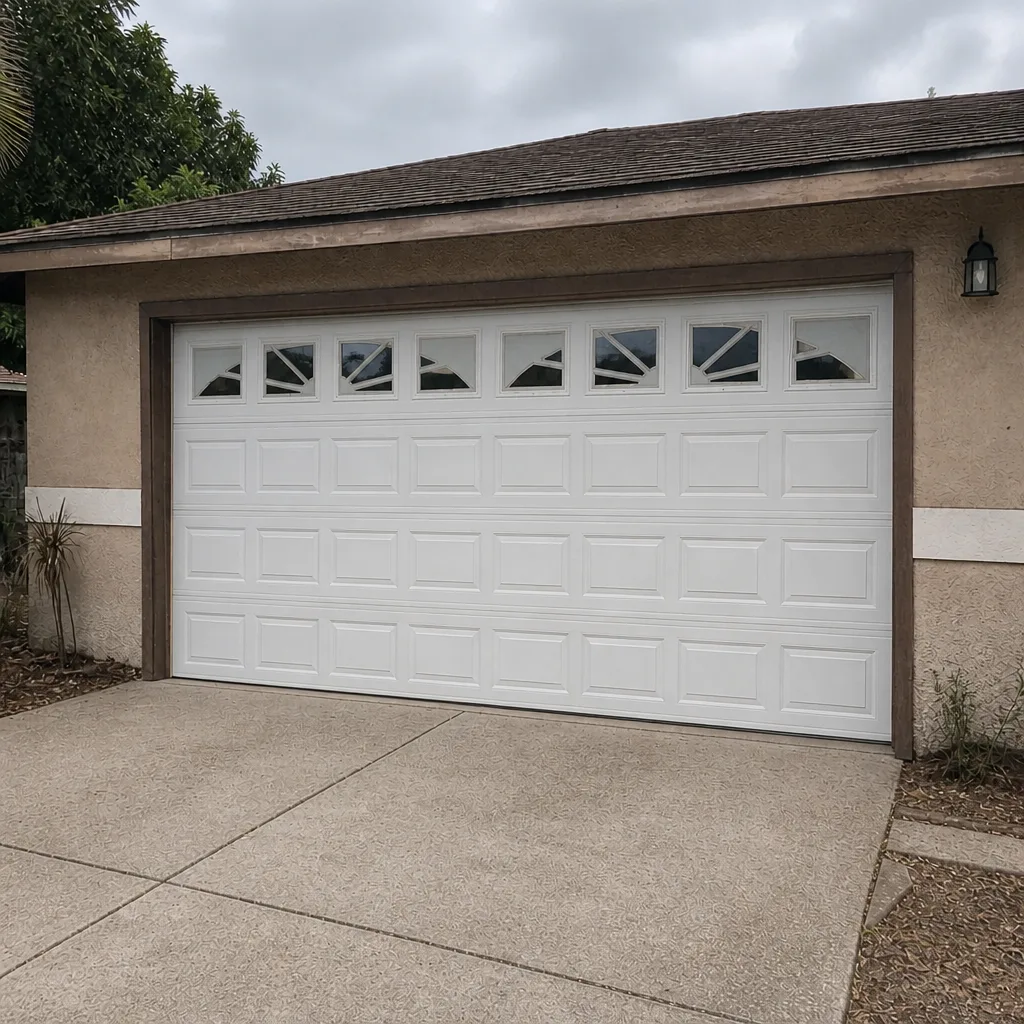 After
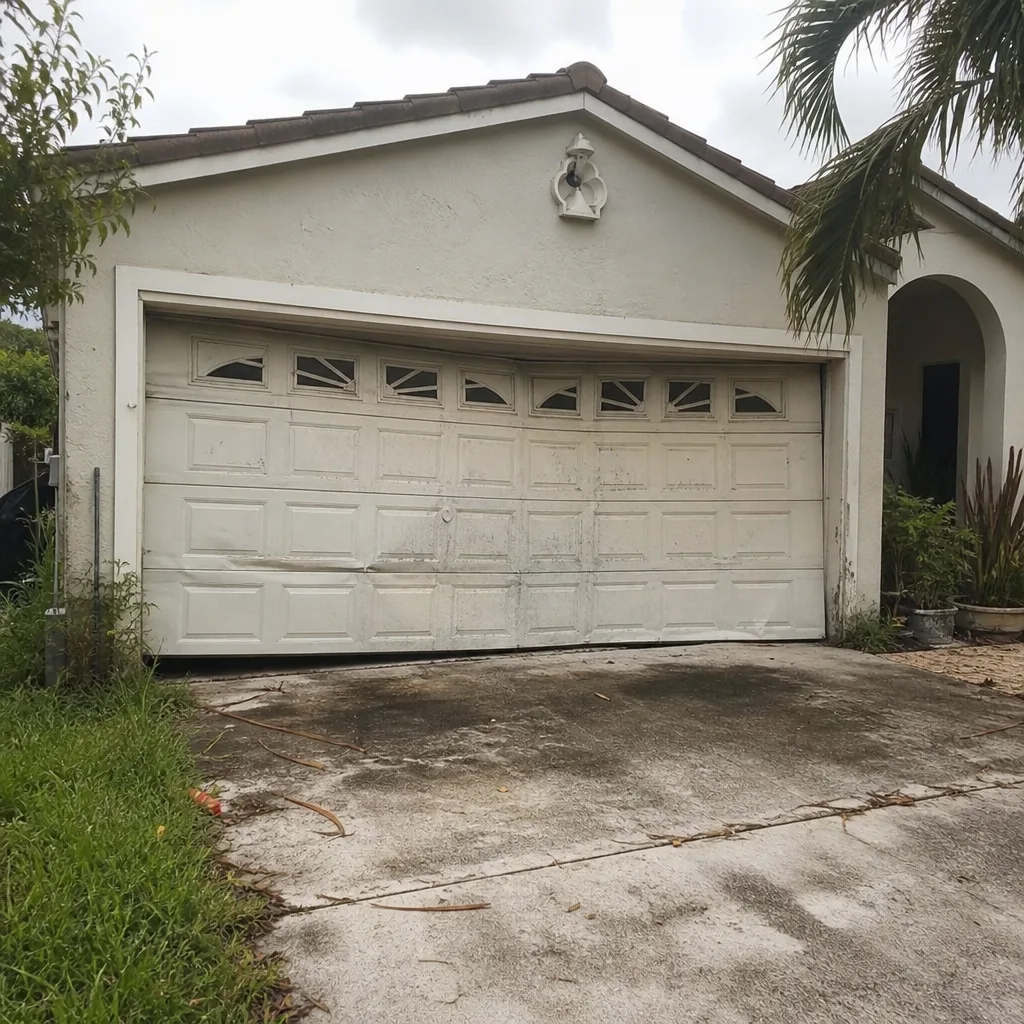 Before
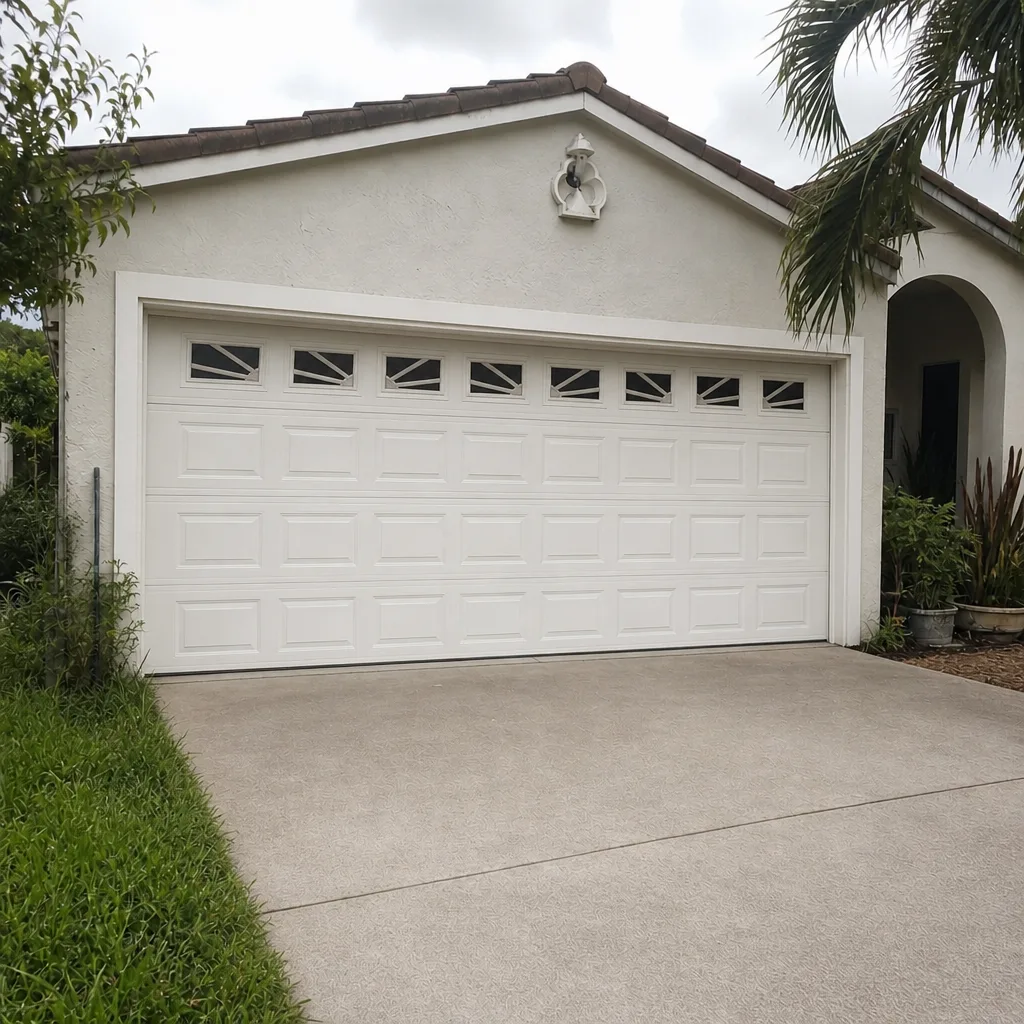 After
When to Call a Professional
Some maintenance is DIY, and some isn’t. Bring in a trained technician when you see a broken torsion spring, a snapped cable, a door that’s come off its track, a door that won’t stay balanced after repeated adjustment, or a spring anchor plate that’s rusting or loose. Call a professional if the door reverses unexpectedly, if it drops on its own during the balance test, or if your opener continues to strain after you’ve lubricated the rollers and checked the balance. In a Miramar home, a garage door failing during storm season is a bigger problem than a door failing in calm weather – don’t wait. Our technicians have up to 15 years of experience, and we work across the major door and opener brands. We offer free estimates in Miramar – call (866) 552-3599. We answer 24/7. Fast dispatch, 7am-7pm.
Frequently Asked Questions
Every three to four months, using a silicone-based spray or white lithium grease on springs, hinges, and steel rollers. Miramar’s humidity makes the schedule tighter than it would be in a dry climate. Skip the track – it should stay clean and dry.
Yes. Heat and thermal cycling accelerate spring fatigue, so a torsion spring rated for 10,000 cycles can fail sooner in a Miramar garage that hits extreme temperatures in summer. Watch for a broken spring during hot months and call a technician immediately if you see a gap in the coil.
Yes, replacing bottom seals and trim seals is a reasonable DIY job. Order the correct replacement strips for your door brand, or have a specialist source them. The hard part is matching the seal profile to your door – Clopay, Amarr, and similar manufacturers publish the seal type for each model.
The door drops, sags, or drifts when you release it halfway open. A passing door stays put. If it fails, don’t force it – the springs need adjustment or replacement by a trained technician.
If the opener keeps reversing, strains, or shows error lights after you’ve lubricated the rollers and checked the balance, yes. A trained technician can distinguish an opener issue from a door issue. We service LiftMaster, Chamberlain, Genie, and Craftsman systems, and our technicians have up to 15 years of experience. Call (866) 552-3599 for a free estimate. We answer 24/7.
Inspect the panels for dents and separation, check the bottom seal and tracks, and confirm all hinges and rollers are tight and turning freely. Do this before June 1. If your door needs permit-level work, check with the city’s building department. For a door inspection, call us. Our Denali Garage Door Repair team can take a look.
The Bottom Line
A Miramar garage door needs a maintenance cadence built for heat, humidity, UV, and hurricane season – not a national-average checklist. Run a balance test monthly, lubricate every three to four months with the right product, inspect weather stripping for UV degradation, watch for rust on hinges, rollers, and the spring anchor plate, and do a full pre-June-1 inspection of panels, seals, and tracks. When a spring breaks, a cable snaps, or the door comes off its track, call a trained specialist rather than attempt the fix. Every estimate we provide is free and written before the work begins, and any quote is yours to approve first.
Our technicians have up to 15 years of experience and work with doors and openers from LiftMaster, Chamberlain, Genie, Clopay, Amarr, Wayne Dalton, Craftsman, and Raynor. We handle repair, opener diagnostics, and full installation. For Miramar homeowners who need a hand with a door, call (866) 552-3599 for a free estimate. We answer 24/7. Fast dispatch, 7am-7pm, Sunday through Friday.
Written by the team at Denali Garage Door Repair.