
Last updated November 15, 2026
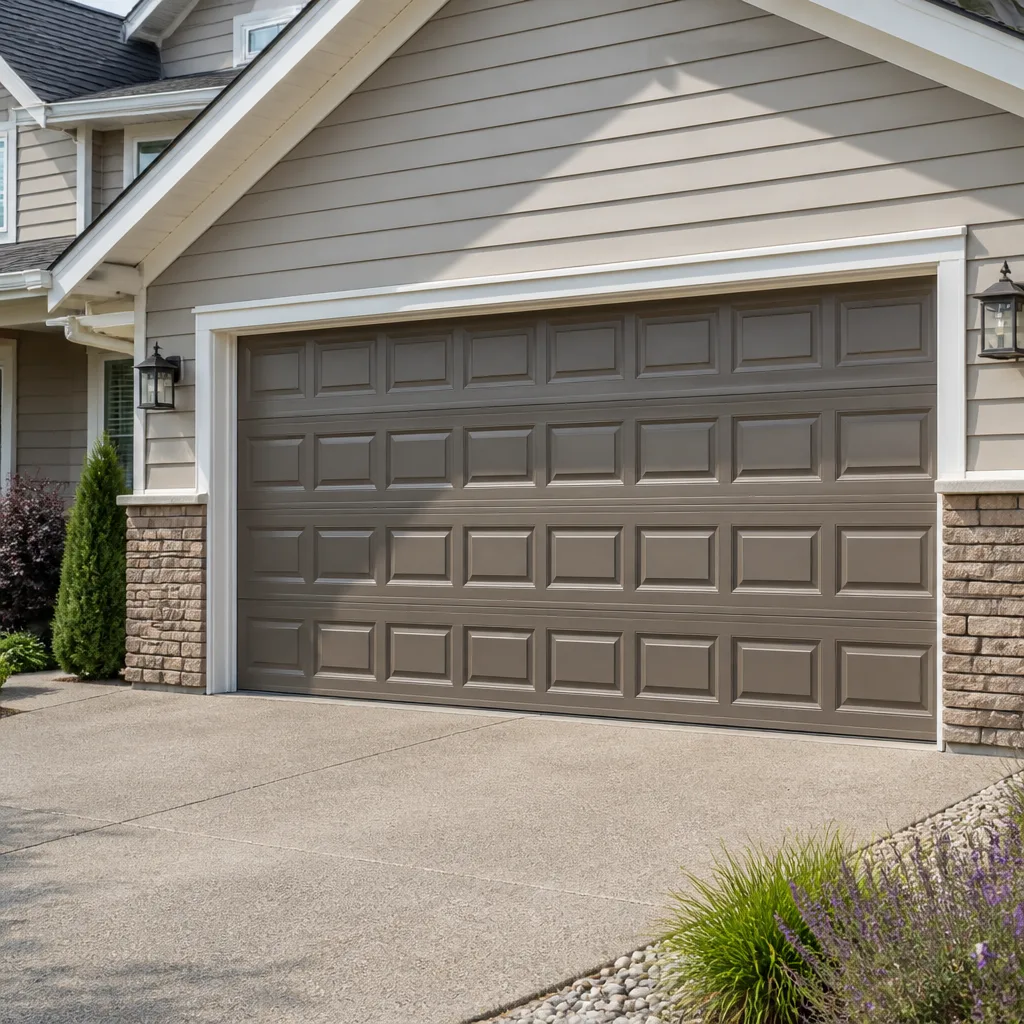 Raised-panel steel
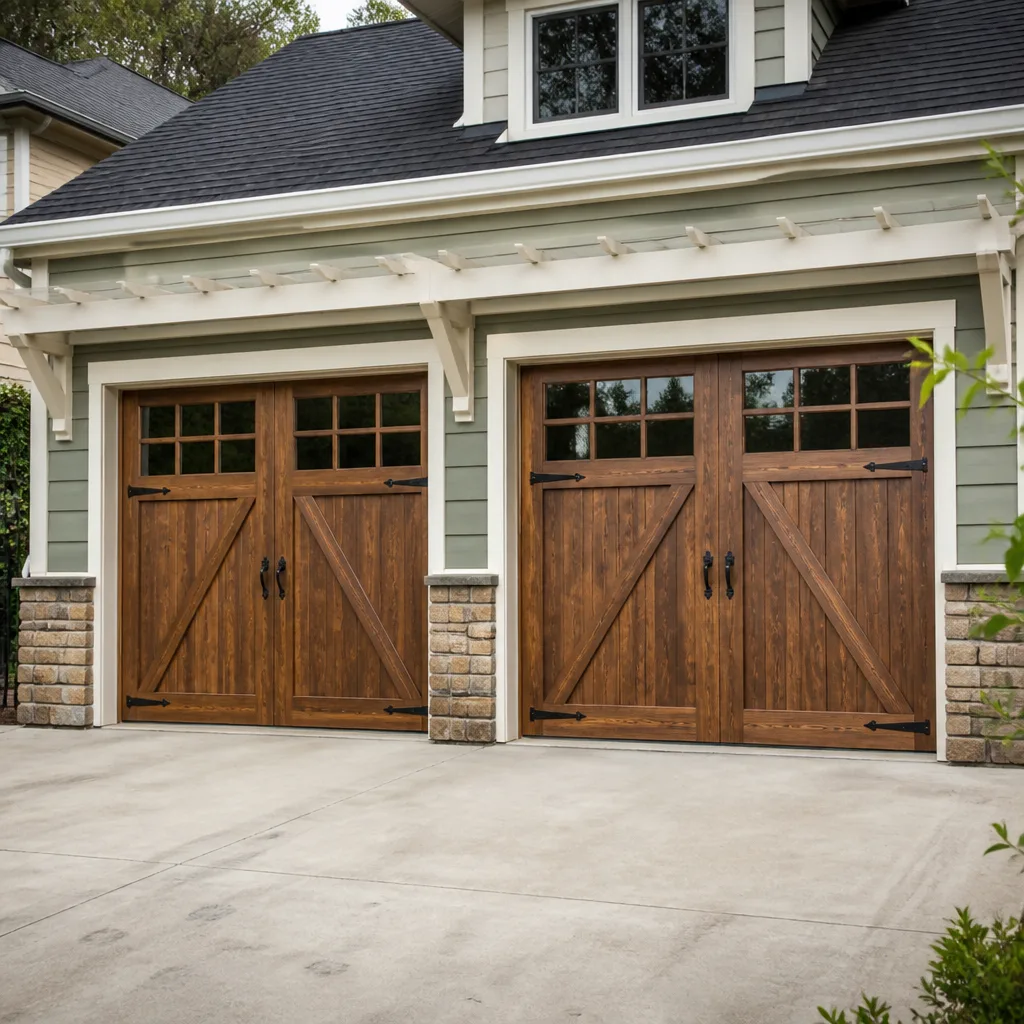 Carriage house
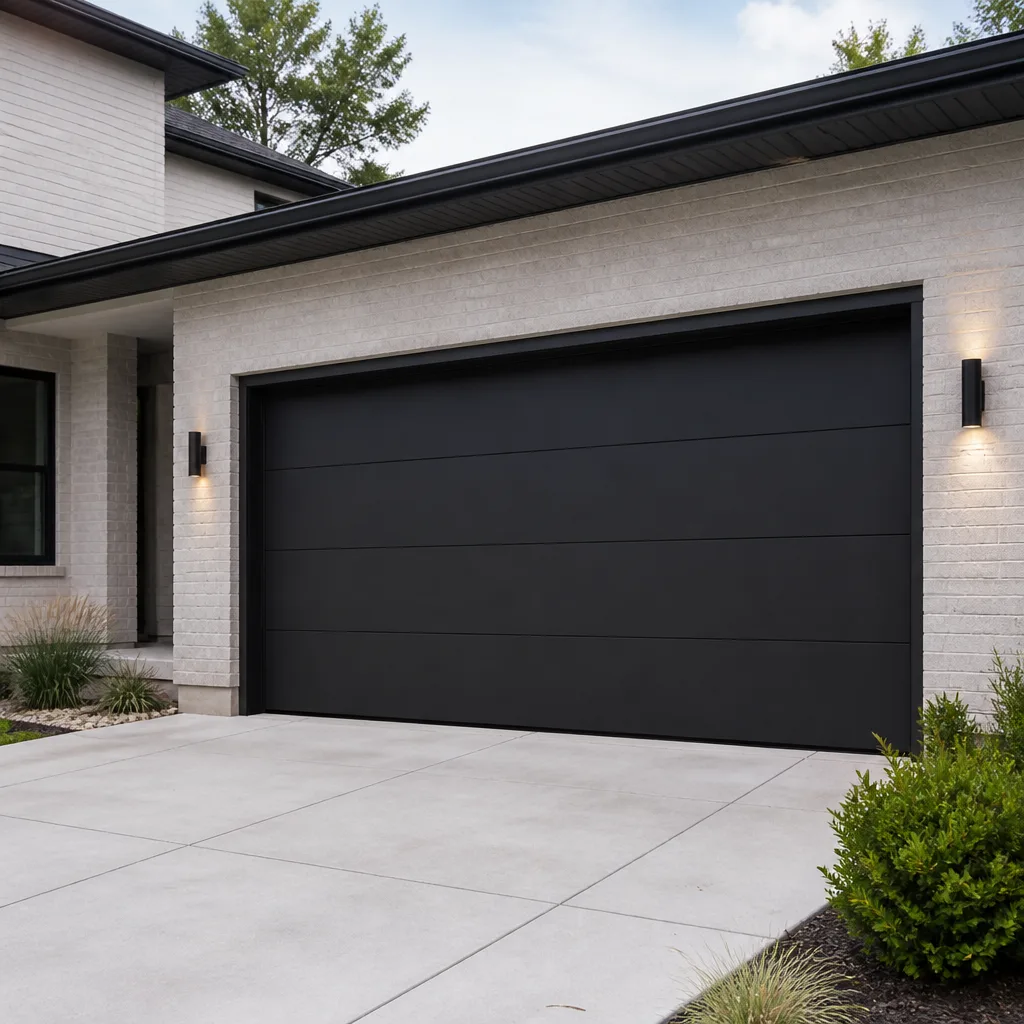 Modern flush
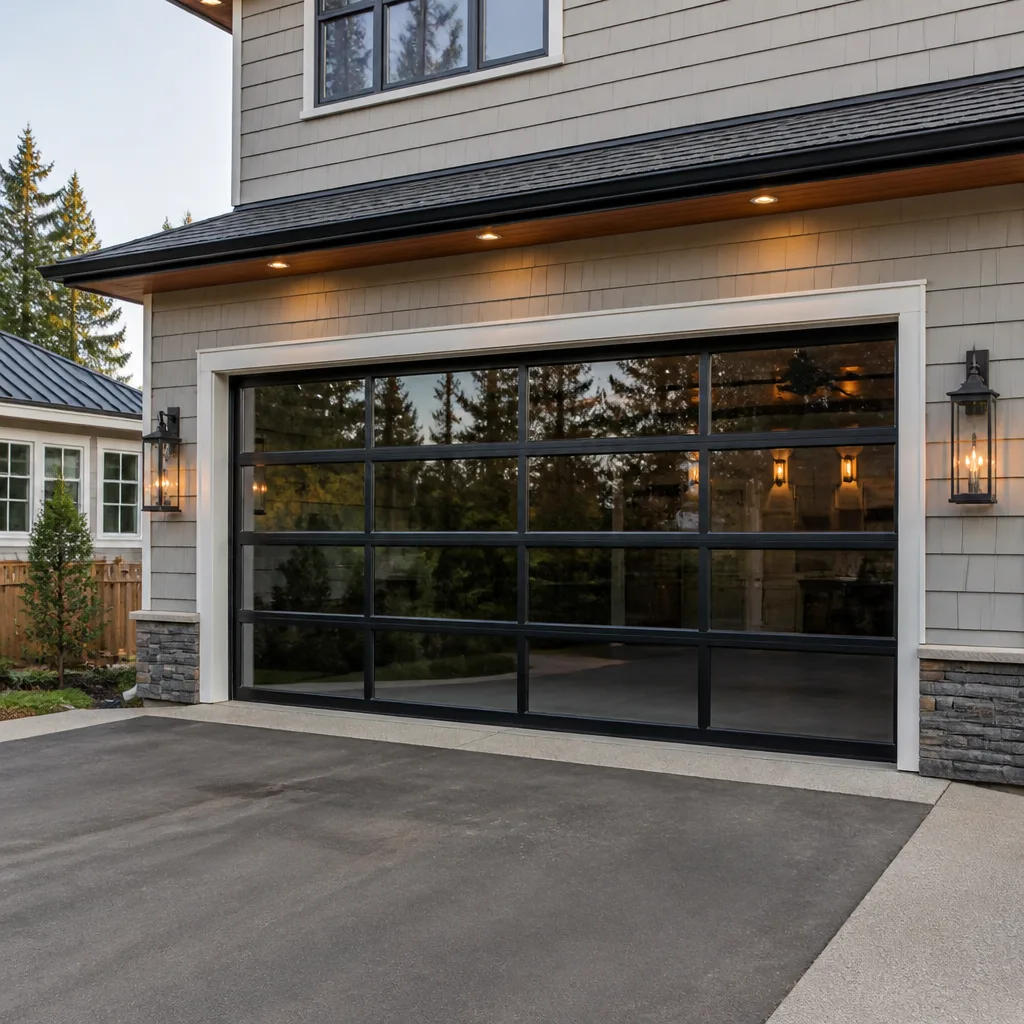 Full-view glass
 LiftMaster openers
 Chamberlain openers
Full 25-point door and opener safety check with every visit - springs, cables, rollers, tracks, and your LiftMaster or Chamberlain opener included
You get a price before we start. It does not change when the pro arrives.
Get your free estimateGarage Door Warning Signs: A Miramar Homeowner’s Reference Guide
Most warning-sign lists stop at the obvious: it’s loud, it’s slow, it wobbles. That tells you something is wrong but not what, and not whether you can safely use the door tonight. This guide does the matching. Each sound, each visual cue, each opener quirk gets paired to the component most likely behind it, with a triage band so you know what waits, what gets scheduled, and what means you stop operating the door now. You’ll also get the two safety tests any Miramar homeowner can run in five minutes. What follows is how we read a door in South Florida humidity, where rust and binding compress the timeline compared with drier parts of the country.
Quick Answer
The main garage door warning signs are unusual noise (grinding, squealing, popping, banging), a door that moves unevenly or reverses on its own, visibly frayed cables, and springs that look stretched or gaps that appear in the coils. In Miramar, humidity-driven rust and binding tend to surface these signs earlier than in dry climates, so a symptom that’s “just starting” is worth acting on quickly. A door that moves unevenly, has a frayed cable, or makes a sharp popping sound should be inspected before you keep operating it.
Styles & brands we work with
- Raised-panel steel
- Carriage house
- Modern flush
- Full-view glass
- LiftMaster openers
- Chamberlain openers
Table of Contents
- What Each Garage Door Sound Is Telling You
- How to Read Your Cables, Springs and Rollers
- Why South Florida Humidity Compresses the Timeline
- Opener Symptoms vs. Spring and Cable Failure
- The Two-Part Safety Test
- The Triage Framework: Fix Now, Schedule Soon, Watch
- Common Mistakes to Avoid
- Frequently Asked Questions
What Each Garage Door Sound Is Telling You
A noise is a location clue. Grinding and squealing usually come from moving metal-to-metal contact, and popping or banging usually comes from stored energy releasing or hardware letting go. That split matters because the first group tends to be progressive wear you can schedule, while the second group is often a sudden-failure indicator that changes how you should use the door today.
- Grinding points to rollers, hinges or the track where the door rides. In Miramar humidity, rust film on steel rollers and hinge pivots is a common early driver. Grinding that worsens as the door moves usually means lubrication has stopped covering the friction points and wear is progressing.
- Squealing or high-pitched whining often signals dry rollers or a torsion spring or bearing plate that has lost lubrication. It can also come from an opener’s gear and rail. This is usually the most forgiving sound on the list, but it’s the one that turns into grinding if ignored.
- Popping is the one to take seriously. A sharp pop during operation can mean a torsion spring has begun to fail or a cable has slipped from its drum. A popping door should be treated as unsafe to operate until inspected.
- Banging or slamming usually points to the door hitting the floor too hard, which is a symptom of a bad spring balance or worn bottom brackets, or to loose hinges and brackets that shift under load.
- Rattling is often just loose bolts and hinges, but a new rattle that appears alongside a slow or uneven door should prompt a full inspection rather than a quick tighten.
One note on judging urgency: an occasional noise on a cold morning is normal, but a sound that repeats every cycle, or that appeared suddenly, is the signal to act. Our technicians have up to 15 years of experience reading doors on all the common brands, including Wayne Dalton and Craftsman systems, so the diagnosis usually starts with the symptom you can describe over the phone.
How to Read Your Cables, Springs and Rollers
Most component failure gives a visible warning first. A quick visual pass with the door closed, done from standing height with no reaching into the mechanism, catches most of the signs that matter. What you’re looking for is change, not perfection. A slightly rusty hinge is normal; a freshly frayed cable is not.
Reading the cables
Garage door cables run along the sides of the door and wrap around drums at the top. You’re checking the surface texture. A few fuzzy strands at a single endpoint is the “schedule soon” pattern. A cable with multiple broken wires along its length, a kink, a birdcage shape, or a cable that has come off its drum is the “do not operate today” pattern, because a cable under tension releasing suddenly moves with enough force to cause serious injury.
Reading the springs
Torsion springs sit on a shaft above the door; extension springs run along the sides. On torsion springs, a visible gap in the coil or a spring that looks stretched with coils that no longer sit evenly together is a warning. On extension springs, a stretched spring or one that has lost tension is equally worth a call. Never touch, adjust or attempt to wind a spring. They’re under high tension and are one of the few genuinely dangerous parts of a garage door. This is a job for a trained professional.
Reading the rollers, hinges and track
Rollers that are flat-spotted, cracked or heavily rusted cause grinding and uneven travel. Hinges that are loose or bent let the door sag. Track is the easiest to spot: dents, kinks or a section that has pulled away from the wall cause binding and should be repaired rather than forced. On multi-panel doors common on Clopay and Amarr products, check that the panel seams stay even as the door moves. A panel that lags on one side points to a balance issue rather than a panel problem.
Why South Florida Humidity Compresses the Timeline
Garage door components are steel and, in some cases, galvanized or painted steel. Constant humidity accelerates surface oxidation, and oxidation is the first stage of the wear that produces grinding, binding and eventually failure. A homeowner in a dry climate might see a rusty hinge for a season before it starts dragging. In Miramar, the same hinge can move from surface rust to friction to audible grinding in a shorter window. That’s the core reason we recommend a visual pass on the door more often than a national article would.
What that means in practice:
- Lubrication intervals matter more here. Hinge pivots, rollers and the spring bearing plate all benefit from regular lubrication. If you don’t know when the door was last lubricated, that’s the first thing to check.
- Rust on moving parts is a leading indicator, not a cosmetic issue. Rust on the spring itself, on the drums, or on the hinge barrels is the early signal. Rust on the static frame is usually just paint.
- Binding compounds noise. A door that binds slightly will start to squeal, then grind, then strain the opener. In a humid climate the whole progression happens faster.
- Warped panels follow humidity too. Wood and some composite panels can absorb moisture. If a panel is warping, the door can lose balance and the opener starts working harder.
One clarification about climate here: it’s humidity and general storm exposure, not salt air or freeze-thaw, that drives the local pattern. Hail is uncommon in Miramar. If you’re dealing with impact damage, that’s a different inspection from humidity wear, and both are worth a look before summer storms settle in. For the full range of repair work a Miramar door can need, our garage door repair page covers what falls into each type of call.
Opener Symptoms vs. Spring and Cable Failure
This is where a lot of homeowners get the diagnosis wrong, because a failing spring and a failing opener throw nearly identical symptoms. The door moves a little and reverses. The opener runs but the door barely lifts. There’s a grinding or humming sound when you press the remote. The pattern is what separates them, not the symptom alone.
Signs it’s the spring or cable
- The opener runs, the motor sounds normal, and the door rises unevenly or only part way.
- The door feels much heavier than usual when you lift it by hand (only with the opener disconnected, and only if you can do so safely).
- The door is very easy to lift by hand, as if it has no weight. That can indicate a broken spring.
- The door reverses immediately on closing, or the opener seems to “give up” part way down.
- The opener runs for a second and then stops with the door in the same position.
Signs it’s the opener, motor or logic board
- The opener hums but nothing moves at all, and there’s no resistance by hand. That points to a stripped gear or a drive issue on the unit itself.
- The remote doesn’t respond, the wall button works, and the door operates normally otherwise. That’s a remote, sensor or logic-board symptom.
- The door cycles normally but stops at the same point each time. That can be a travel-limit setting rather than a mechanical fault.
- The opener works only sometimes, with no pattern to the door position. That’s often a logic-board or Wi-Fi/smart-module problem.
The distinction matters because it sends you to the right service. Our dedicated garage door opener repair covers motor and logic-board diagnostics on the widely installed drive brands – LiftMaster, Chamberlain, Genie and Craftsman – including the smart and Wi-Fi-enabled units that have become common on Miramar homes. If the diagnosis points to the door’s springs, cables or panels, that’s the repair side of the same call. From the spring to the smart opener, we handle both.
The Two-Part Safety Test
This is the test every homeowner can run in under five minutes, and it catches the two failure modes that matter most: an out-of-balance door and a reversing system that no longer works. Do this with the door at rest and no one standing in the path of travel. If you see a frayed cable or a popping spring at any point, stop and call for service rather than running the test.
- Disconnect the opener. Pull the manual release handle so the door is under its own weight only. Use the handle, not the door, and keep your hands clear of the springs and tracks.
- Run the balance test. Lift the door by hand to about waist height and let go. A balanced door stays put, or moves only slightly. A door that drops on its own, or that you have to strain to lift, is out of balance and needs a spring or cable inspection.
- Reconnect the opener. With the door fully open, push the release back into its locked position and confirm the door is engaged before using the remote.
- Run the auto-reverse force test. Lay a small board flat in the door’s path and close the door with the wall control. The door should stop and reverse the instant it meets the board. If it does not, the force setting or the safety sensors need attention before the door is used again.
- Check the photo-eye sensors. With the door open, sweep a hand across the sensor beam at the bottom of the tracks on both sides. The door should not close while the beam is broken. If it does, the sensors are misaligned or failing.
That’s the whole test. Repeat it once a season and any time the door starts behaving differently. A door that passes in March and fails the balance test in August is telling you the spring has been losing tension, which is the pattern humidity and heat tend to produce here.
The Triage Framework: Fix Now, Schedule Soon, Watch
Not every sign needs the same response. The useful question is not “is this normal?” but “how long can I keep using the door?” Most warning signs fall into three bands. Reading your door against the bands is what lets you decide without guessing.
- Fix now (stop operating the door). A frayed or off-drum cable. A spring with a visible gap or one that has visibly broken. A door that drops under its own weight. A popping sound during operation. A door that reverses for no reason on closing. Any of these means the door isn’t safe to keep cycling, and a trained professional should be the one to look at it. Call (866) 552-3599; we answer 24/7, and fast dispatch from 7am to 7pm, Sunday through Friday, is how we handle the urgent ones.
- Schedule soon (use it, but don’t wait). Grinding that gets worse each cycle. A door that has become noticeably louder over a few weeks. Visible rust on rollers and hinge pivots. A single high-pitched squeal that repeats. An opener that runs but doesn’t fully lift the door. These are the warnings that respond well to a scheduled repair and tend to turn into the first band if ignored through a humid stretch.
- Watch (note it, check it). A slight rattle. A squeak on one hinge. A remote that occasionally needs a fresh press. Mild surface rust on the outside of a hinge barrel. These can usually wait for the next service interval, but they should go on a list so you’re not surprised when they escalate.
The triage bands are a starting point. In our experience the door’s own behavior over a week tells you more than a single observation does. Note what happens on the next ten cycles. A doorway that fails the balance test or reverses unexpectedly belongs in the “fix now” band even if the other signs look mild.
Common Mistakes to Avoid
- Assuming a slow door is a door that needs oil. Slow or uneven movement usually means a spring or balance issue, not dry hinges. Lubrication helps noise, not tension.
- Forcing a stuck door. If the opener won’t lift it, pulling the emergency release and hauling the door up by hand can drop it or snap a cable. Stop and call.
- Ignoring a single pop. One sharp popping sound is the warning to stop. Waiting for a second pop is how a spring failure becomes a bigger repair.
- Skipping the safety test because the door “works fine.” The balance test and auto-reverse test catch failures that don’t show up until the door is under load.
- Replacing an opener when the spring is the problem. A new opener bolted to a failing door burns out its motor faster. Diagnose the system first, then replace the part that’s actually failing.
- Assuming a general handyman can handle it. Springs, cables and opener drive systems are a specialty. A door tuned by the same company that installs the brand avoids the mismatched-parts failure that turns into a second repair.
- Putting off the seasonal inspection. In Miramar’s humidity, the visual check is worth more than in most places, because rust progression here is faster than the national pattern. A quick seasonal pass catches the early stage, when the repair tends to be smaller.
See the difference
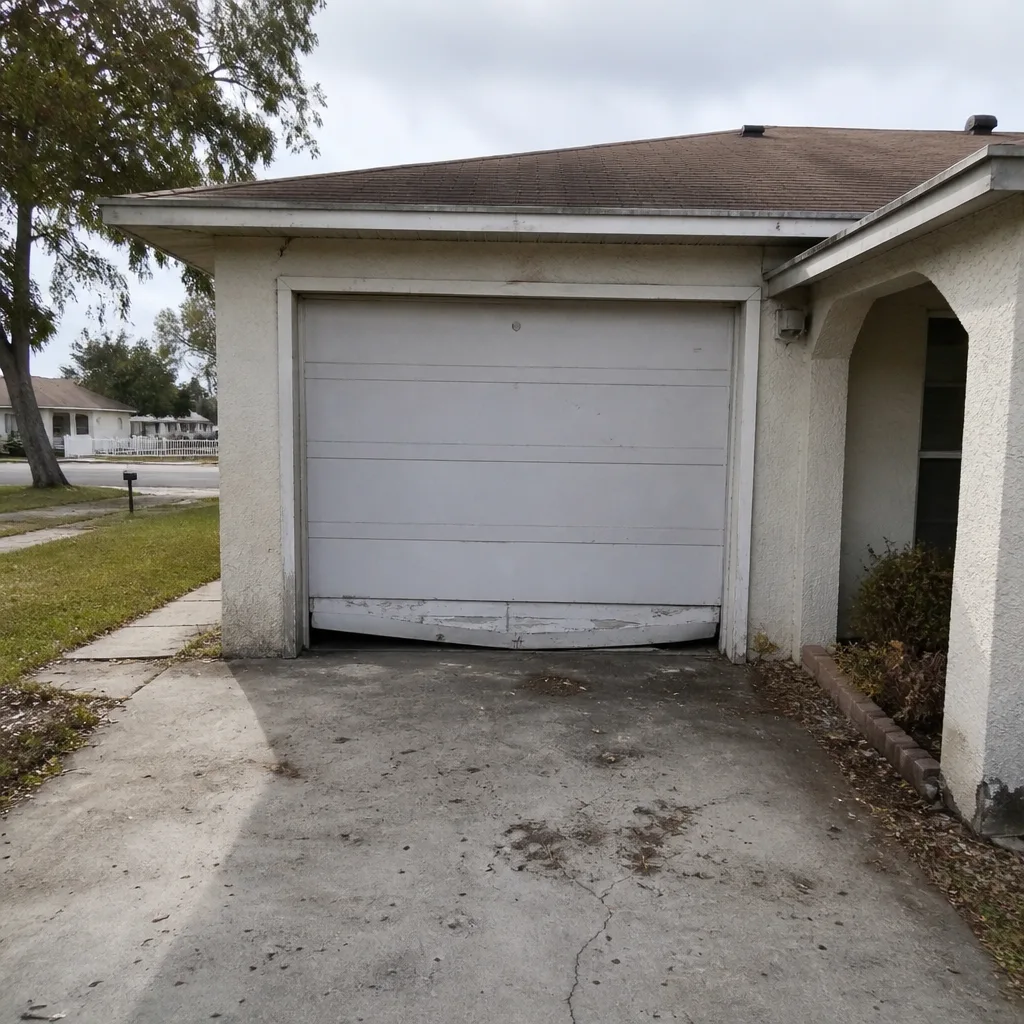 Before
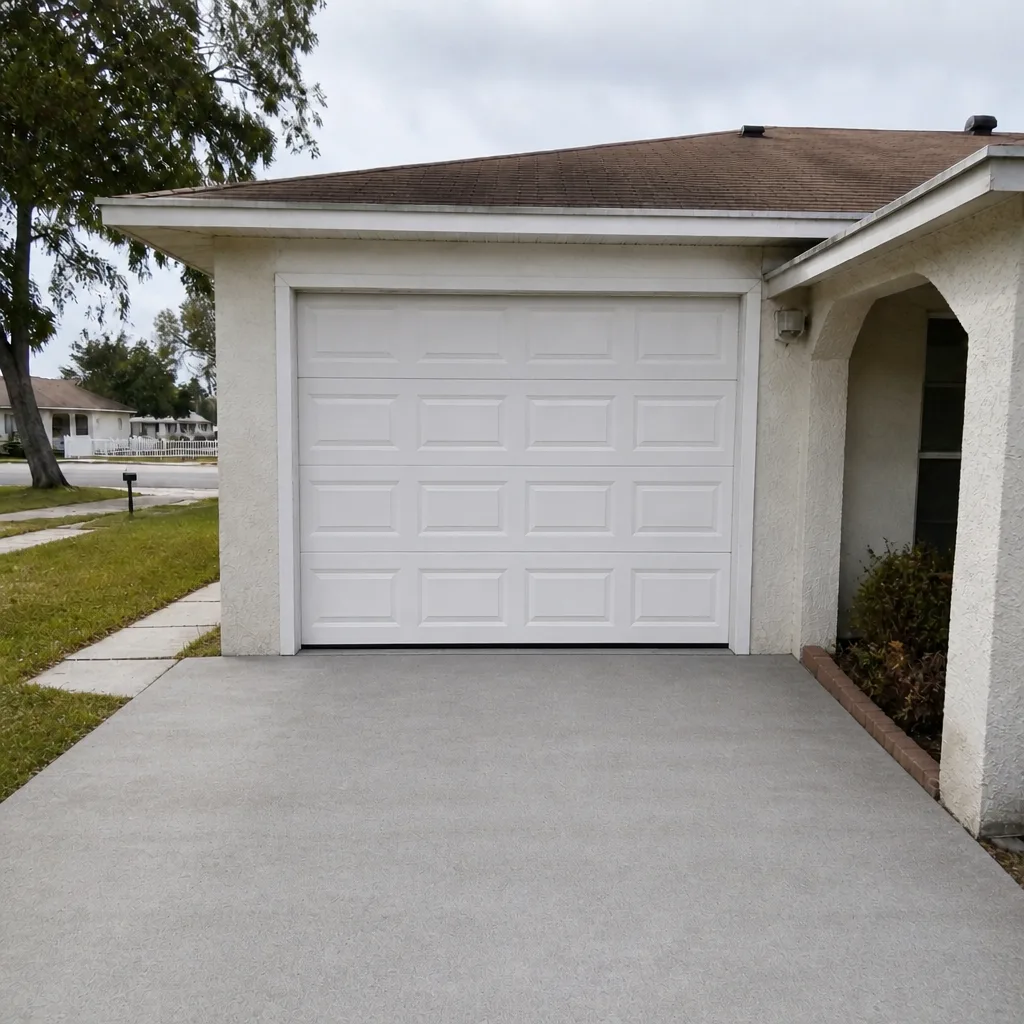 After
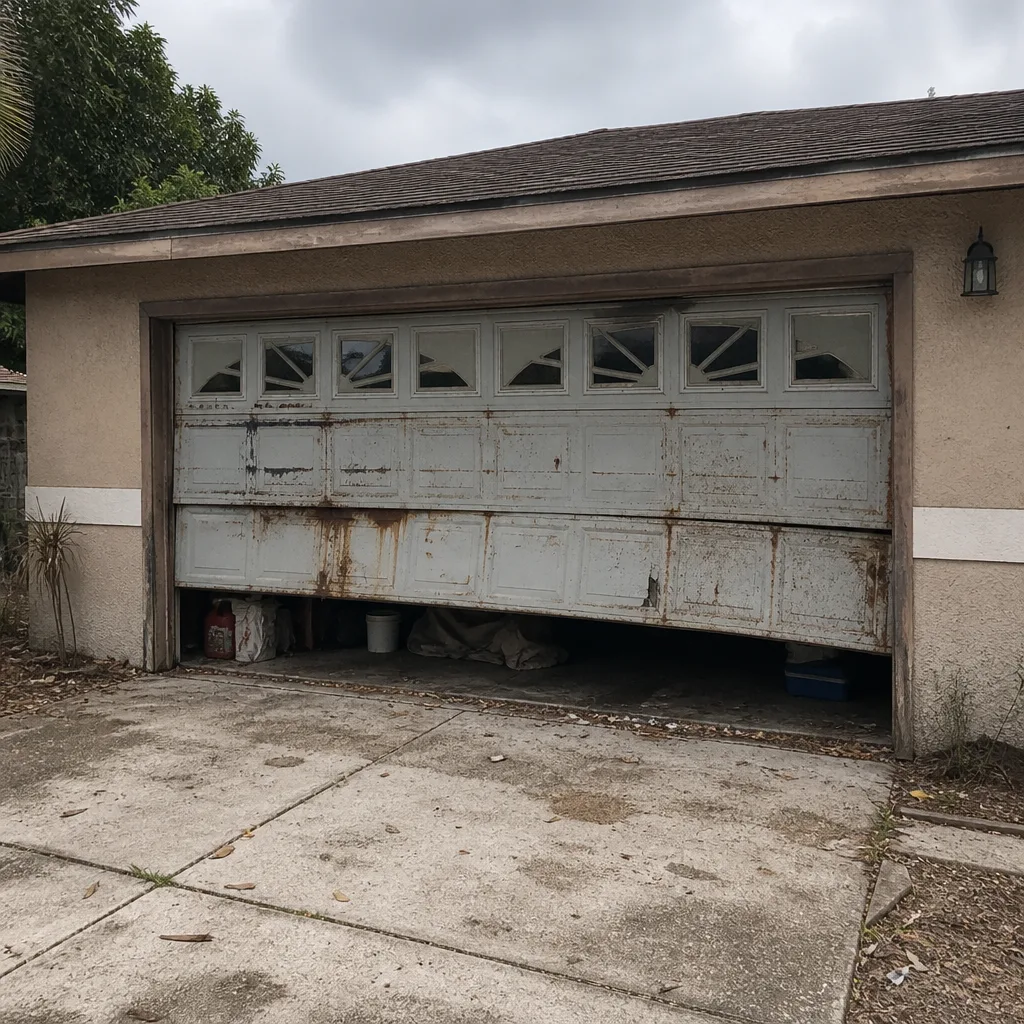 Before
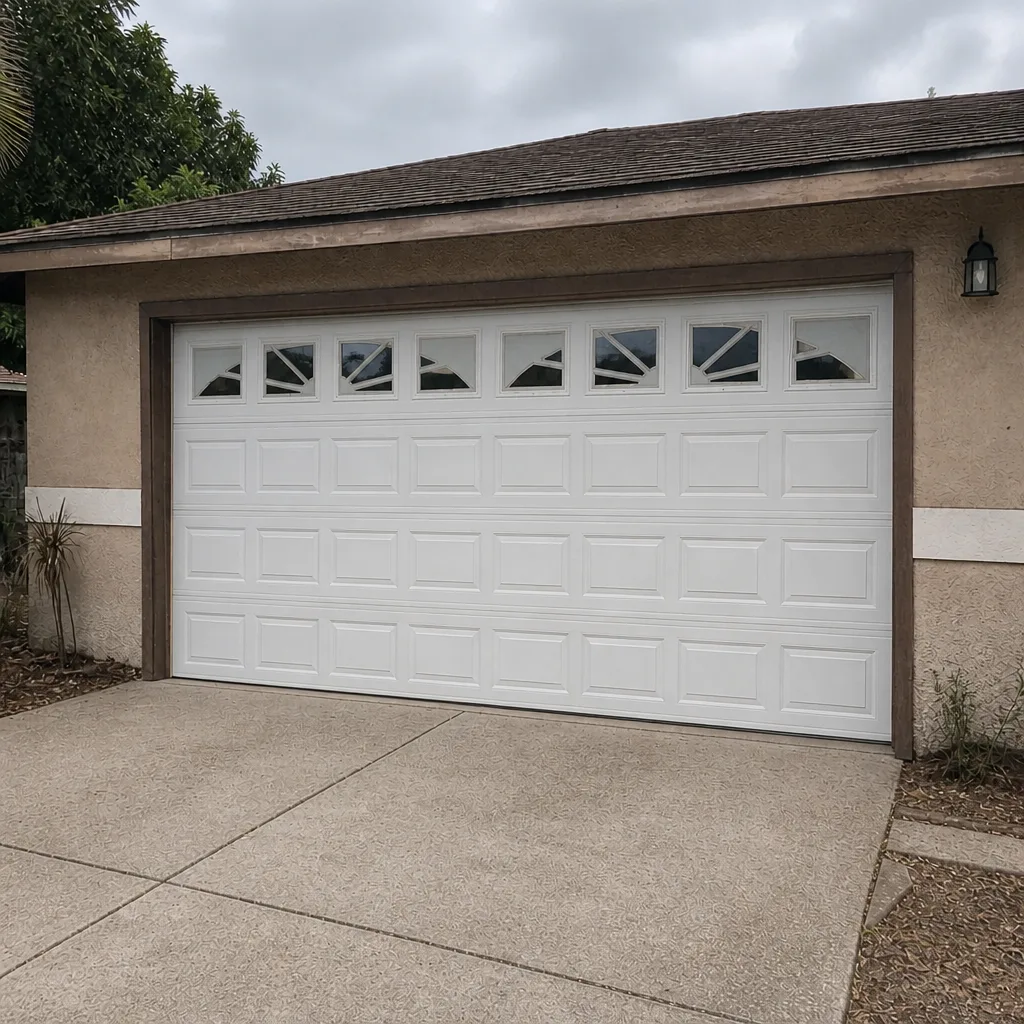 After
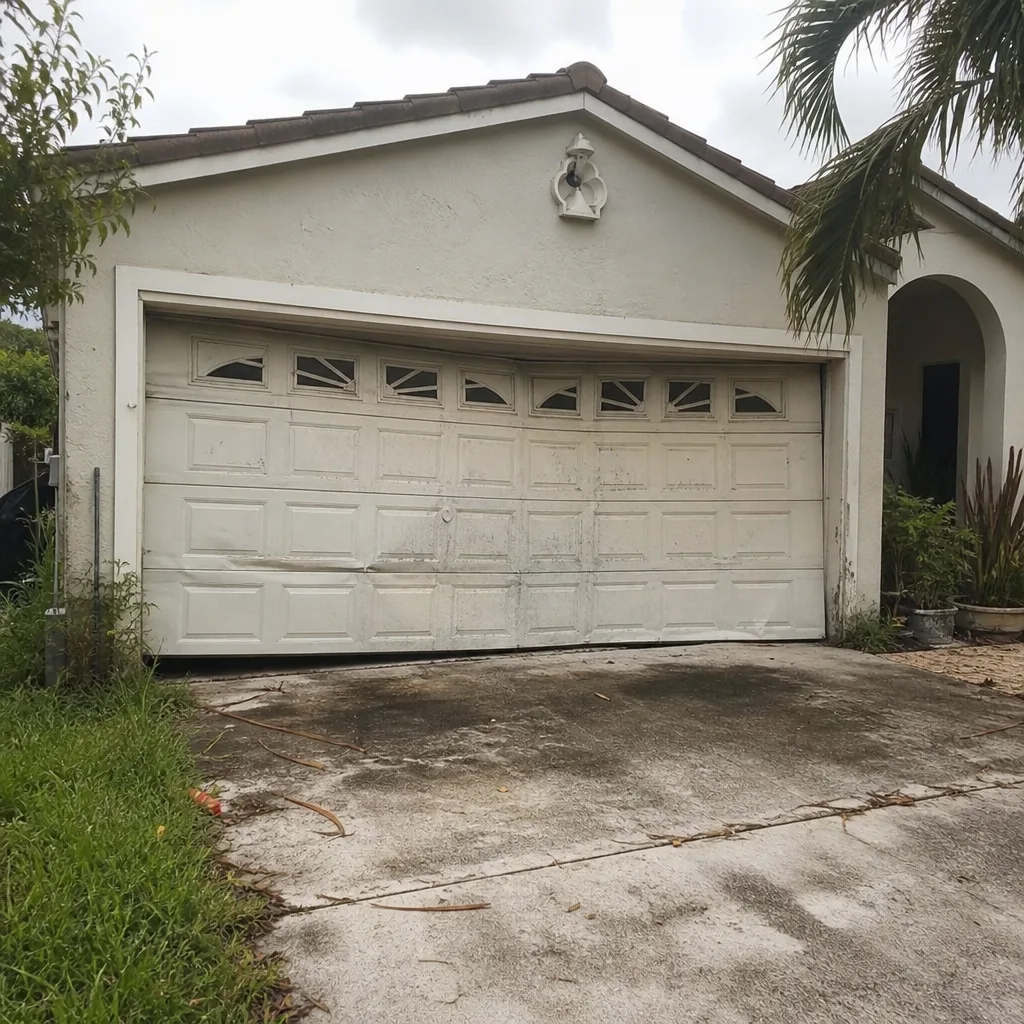 Before
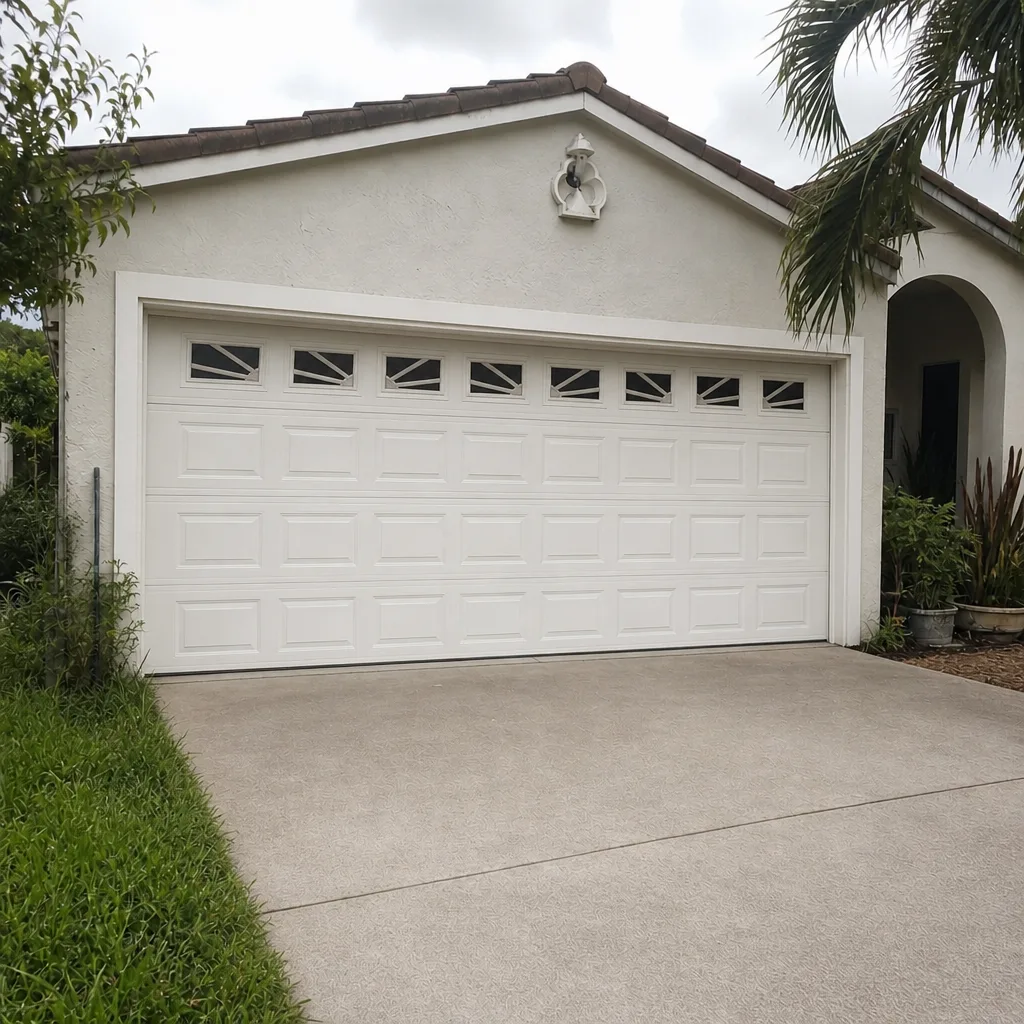 After
When to Call a Professional
Call when a cable is frayed across most of its length, when a spring has a visible gap or looks broken, when the door drops on its own during the balance test, when the auto-reverse test fails, or when the opener runs but the door won’t move. Those are the situations where continuing to operate the door is the mistake. Also call if you’re not sure which category your symptom belongs to. That’s what the phone call is for, and we can often narrow the diagnosis from the symptom and the door’s age and brand before anyone comes out.
Denali Garage Door Repair offers free estimates in Miramar. We’re a garage door specialist, not a general handyman service, and we work across the widest-installed door and opener brands, so you won’t hear “we don’t know that system.” Call (866) 552-3599. We answer 24/7, with fast dispatch from 7am to 7pm, Sunday through Friday. If you’d rather start with the brand and model you have, our Miramar service page covers the details.
Frequently Asked Questions
The earliest signs are usually noise and behavior, not visible damage. A door that has become louder, moves unevenly, reverses unexpectedly, or squeals once per cycle is giving early warning. Rust on the rollers and hinge pivots is another early indicator, especially in Miramar’s humidity. Any single sign is worth checking; two or more together is a call.
A popping sound most often means a torsion spring is failing or a cable has slipped from its drum. Either is a stored-energy failure, so the door should not be operated until it’s inspected. A trained professional should handle it; spring and cable work is one of the genuinely dangerous parts of the trade. Call (866) 552-3599 for an exact quote – estimates are free.
Watch what the opener does when you press the remote. If the motor runs smoothly but the door barely moves or moves unevenly, the spring or cable is the likely fault. If the opener hums and nothing moves, or the door operates fine by hand but not from the remote, the opener itself is the likely fault. If you’re not sure, describe the behavior over the phone and we can usually point you in the right direction.
For a door that won’t close, a door stuck open, or a door with a suspected spring failure, we dispatch as fast as we can. We answer 24/7, with fast dispatch from 7am to 7pm, Sunday through Friday. A call outside dispatch hours is booked into the next opening, Sunday through Friday, 7am to 7pm. Same-day service is often available for urgent repairs. Call (866) 552-3599 for an exact quote – estimates are free.
No. The price is quoted and agreed before any work starts, and the written estimate sets the final price. The range we give over the phone may narrow once we’ve inspected, but nothing gets added after the work begins without your approval. That’s the standard we work to, and it’s worth asking any garage door company to confirm it in writing.
Yes. We’re a licensed and insured garage door specialist, and our technicians have up to 15 years of experience on the major door and opener brands. Because we’re a specialist rather than a general handyman service, we focus only on garage doors, openers and installation, which is what we want on every call. Call (866) 552-3599 for an exact quote – estimates are free.
Not always, but a noise that’s new, that repeats every cycle, or that’s gotten louder over a few weeks should be looked at. In Miramar’s humidity, noise tends to be the first visible sign of binding, and binding progresses faster here than in drier climates. Left alone, binding strains the opener and tends to turn into a bigger repair.
The Bottom Line
Warning signs are only useful when they tell you what’s failing and how soon to act. Slow or uneven movement points to springs and balance. Grinding points to rollers and track. Popping and banging point to springs and cables and land in the “don’t operate it” band. A frayed cable is the clearest visual signal, and the balance test and auto-reverse test are the two checks that catch the failures a visual pass misses. In Miramar’s humidity those checks are worth doing more often than a national article would tell you, because rust and binding compress the timeline. Read the symptom, match it to the component, run the test, and call when the band says call.
If a warning sign has moved into the fix-now band, get a trained professional on it before the door cycles again. Call Denali Garage Door Repair at (866) 552-3599 for a free estimate. We answer 24/7, with fast dispatch from 7am to 7pm, Sunday through Friday, and we handle repair, opener-specific diagnostics, and complete installation across the major brands. Your brand. Our expertise. For the full picture of what we do, start at Denali Garage Door Repair.
Written by the team at Denali Garage Door Repair.