
Last updated November 15, 2026
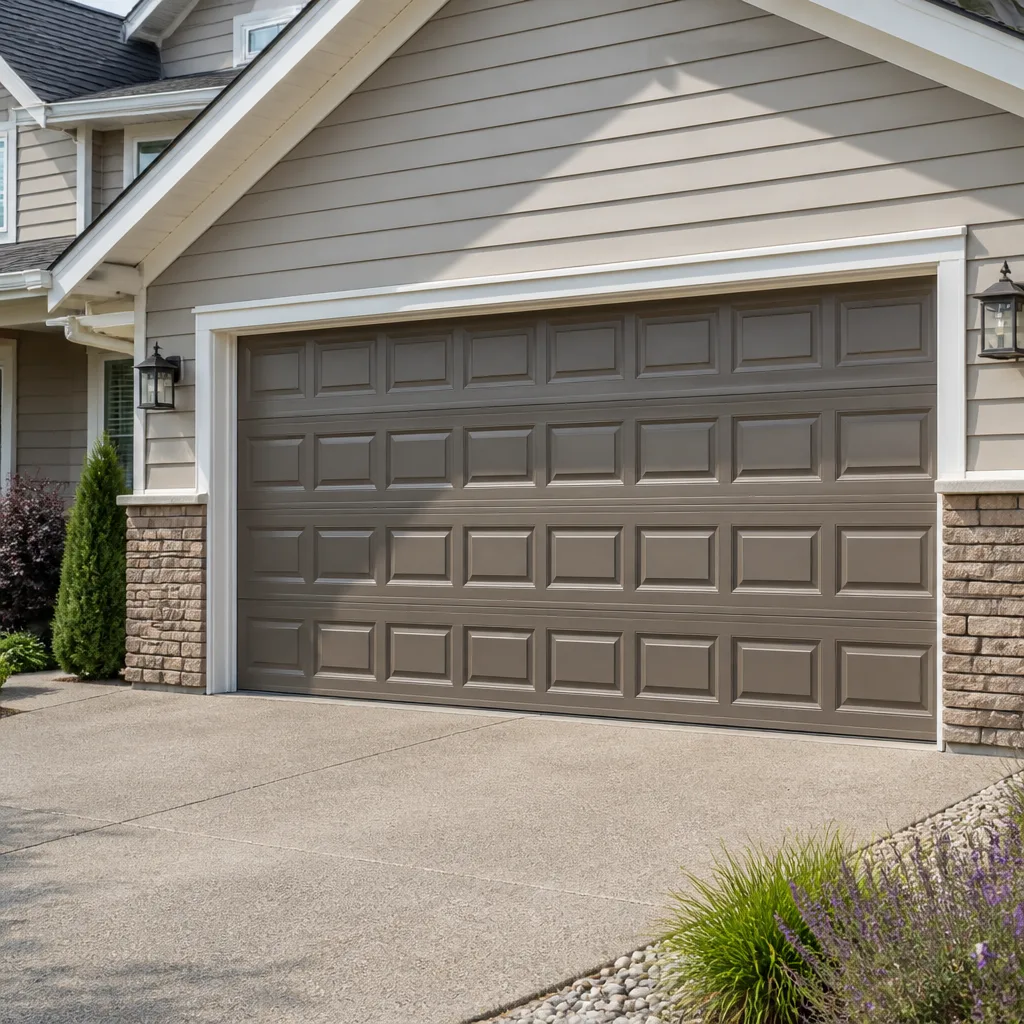 Raised-panel steel
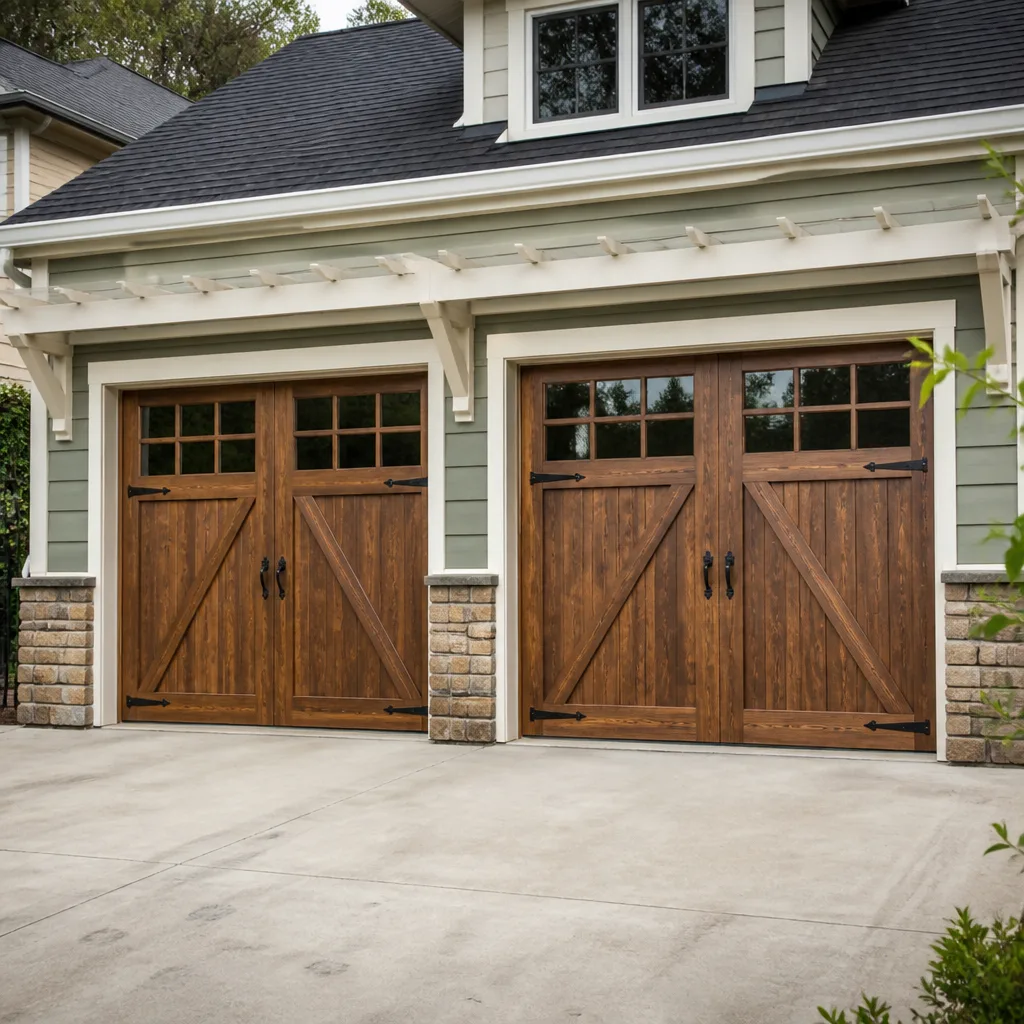 Carriage house
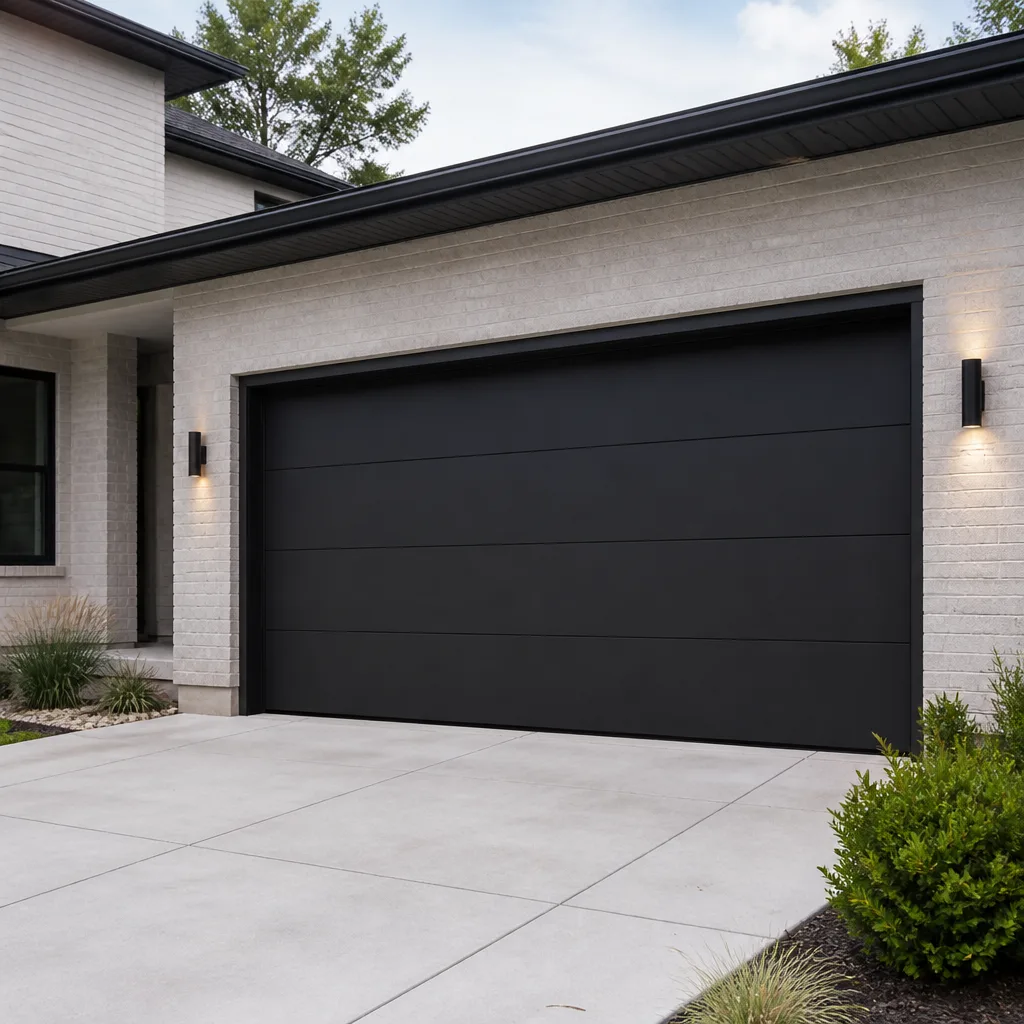 Modern flush
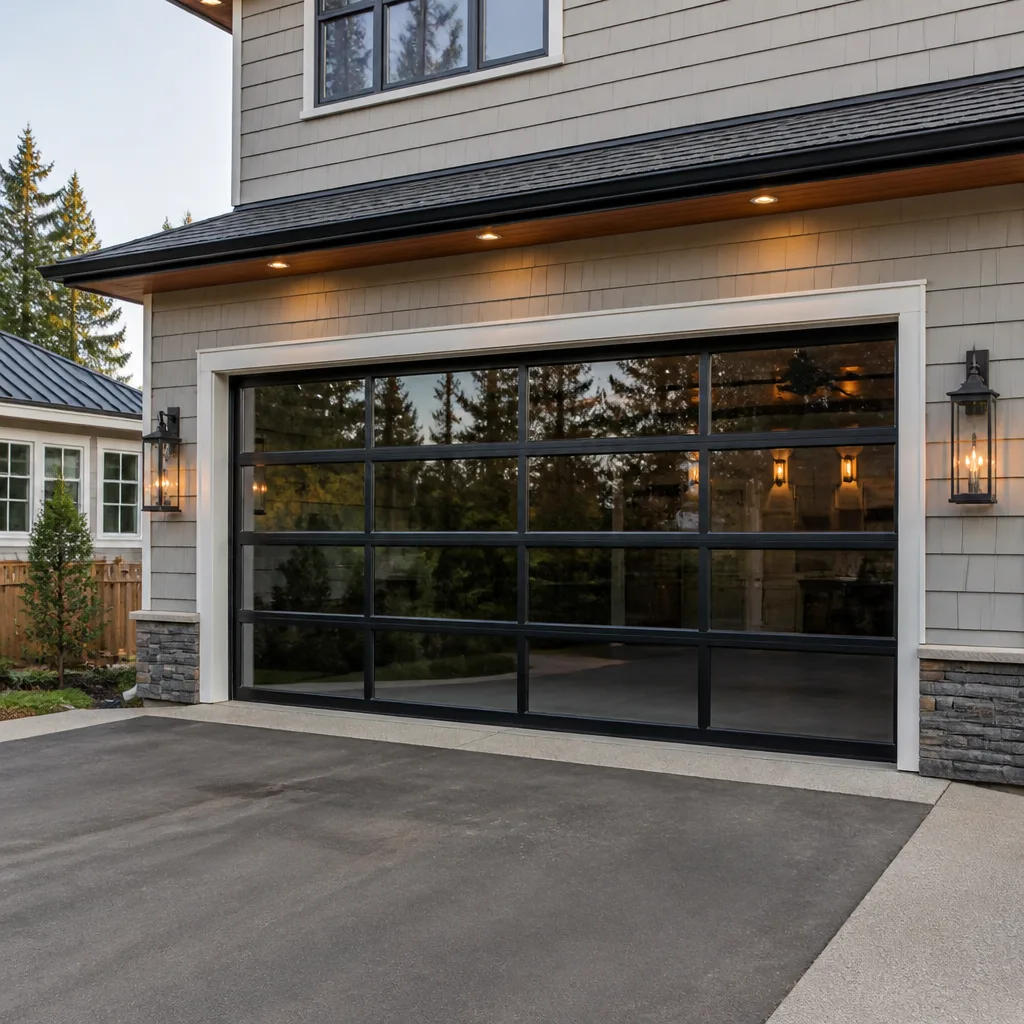 Full-view glass
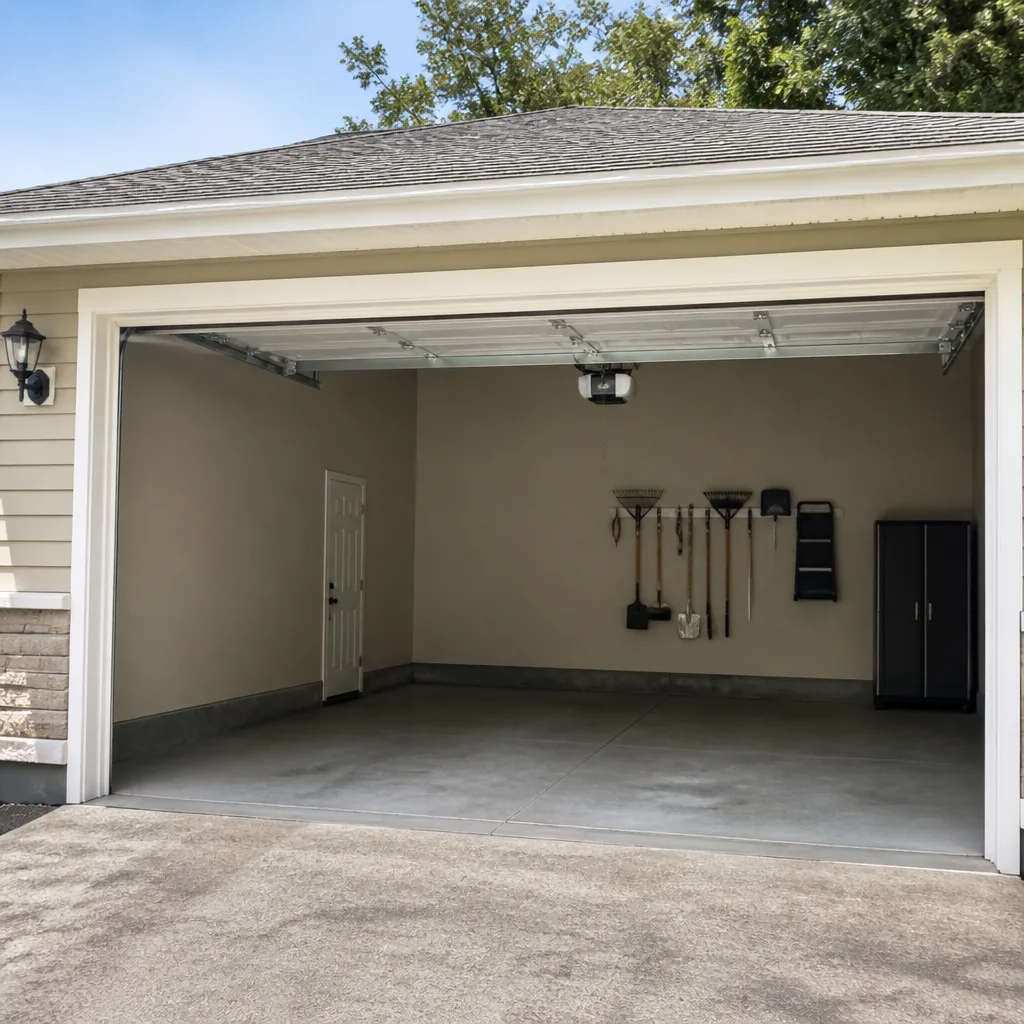 LiftMaster openers
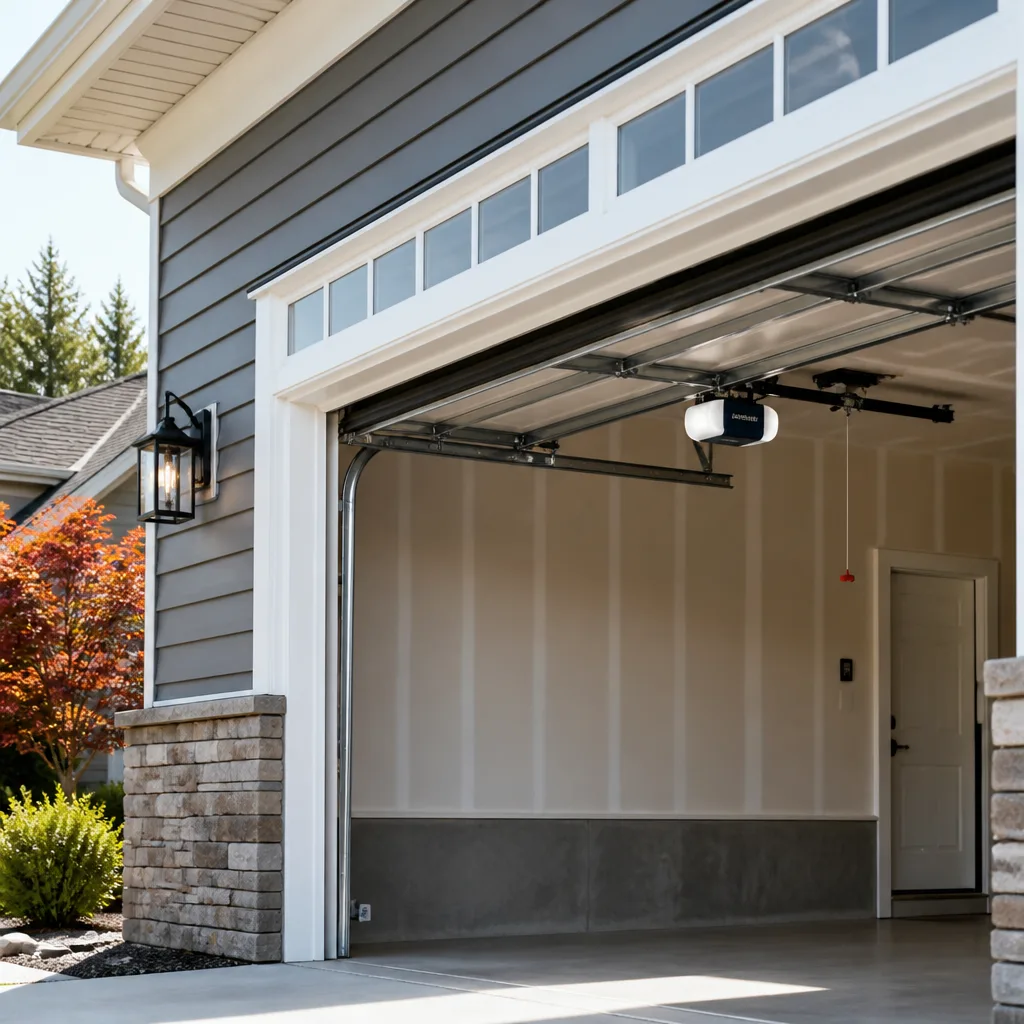 Chamberlain openers
Full 25-point door and opener safety check with every visit - springs, cables, rollers, tracks, and your LiftMaster or Chamberlain opener included
You get a price before we start. It does not change when the pro arrives.
Get your free estimateDIY vs Professional Garage Door: The Miramar Homeowner’s Decision Guide
Most homeowners assume the DIY-or-pro question comes down to confidence. It doesn’t. A garage door is a weighted, spring-loaded mechanical system under constant tension, and the tasks around it split along a line that has nothing to do with how handy you are. Some jobs are genuinely owner-serviceable and cost you an afternoon. Others involve stored energy that can maim or kill, and a few brush against permit rules that can complicate an insurance claim years later. This guide draws those lines precisely for Miramar homeowners, so you can decide with facts instead of optimism.
Quick Answer
Replacing an opener, lubricating hinges, aligning safety sensors, programming a remote, and swapping a weather seal are all reasonable DIY tasks. Anything involving the torsion spring, cables, the torsion tube, or the bottom bracket should go to a trained professional, because those parts hold lethal stored energy. Between the two extremes sit repairs like track realignment, roller replacement, and panel work, where the decision depends on the specific failure and your comfort with the weight involved.
Styles & brands we work with
- Raised-panel steel
- Carriage house
- Modern flush
- Full-view glass
- LiftMaster openers
- Chamberlain openers
Table of Contents
- What Florida Law and Broward County Code Actually Require
- Torsion Spring Physics: Why This Isn’t Like Other Home Repairs
- Permits, Wind Mitigation, and Insurance Exposure
- Where DIY Genuinely Saves You Money
- How to Judge a YouTube Tutorial for South Florida Accuracy
- The Middle Ground: Repairs That Go Either Way
- Opener Replacement: The One Big Job That’s Usually Legal DIY
- What Each Route Costs in Miramar
What Florida Law and Broward County Code Actually Require
Florida does not license garage door installers as a standalone trade, which surprises a lot of people. What the state does regulate is the broader category of work: structural alterations to a home typically fall under a licensed contractor, and local building departments decide when a permit is required for a specific job. Broward County’s building code adopts the Florida Building Code, which carries specific requirements for wind-borne debris regions. Miramar sits inside that region.
The practical upshot: replacing a garage door in Miramar is a permitted activity in most cases, and the door itself needs a product approval that meets the wind-load requirements for the area. Replacing an opener is not a structural change and generally does not require a permit. Spring replacement occupies a gray zone that varies by jurisdiction, so the only reliable answer is to call the city’s building department and describe the exact work.
Here’s how the categories shake out:
- Full door replacement: Almost always permitted. The door needs a Florida product approval that matches Miramar’s wind-load zone.
- Structural track or header modifications: Permitted. Requires a licensed contractor and inspection.
- Torsion spring replacement: Permit status varies. Ask the city’s building department directly before assuming either way.
- Opener replacement (same type): Generally not permitted as a structural change.
- Lubrication, sensor alignment, remote programming, weather seal: No permit, no license, no issue.
The operative point isn’t whether a spring swap is technically illegal. It’s that work performed outside permit requirements can surface during a home inspection, during a sale, or during an insurance claim, and that discovery is where the real cost lives. When in doubt about a Miramar job, we tell homeowners to call the city first – a five-minute phone call is cheaper than a problem discovered at closing.
Torsion Spring Physics: Why This Isn’t Like Other Home Repairs
A standard residential garage door weighs somewhere in the range of a large motorcycle, and the spring system is what makes that weight movable by hand or by a small motor. A torsion spring stores energy by being wound – hundreds of pounds of rotational force held in a coil of steel roughly the diameter of a broom handle. When it’s under tension, that energy is contained. When it releases suddenly, it releases all at once.
This is the part most DIY videos underplay. Replacing a torsion spring isn’t a harder version of replacing a hinge. It’s a different category of task, because the failure mode isn’t “the door stops working” – it’s “the winding bar kicks back with enough force to break a wrist or worse.” Spring and cable work is also the part of the system where the forces are largest and the tolerance for a miscount on winding turns is smallest.
What this means in practice:
- A snapped spring is not a maintenance item you can defer and handle later.
- The system must be de-tensioned before any work on it, and doing that safely requires the right tools and the right sequence.
- Cables under tension are equally dangerous. A cable that slips off a drum can whip with serious force.
- Extension springs (found on older doors) carry their own hazards and need containment cables even when they’re working correctly.
We’re not going to walk you through spring replacement, because a written guide isn’t the right place to learn a task that injures experienced technicians. What we will say is that if your door has a snapped spring, the correct next step is to stop operating it and call a trained professional. Our technicians have up to 15 years of experience with exactly this kind of work, and spring replacement is routine for them in a way it never becomes for a homeowner.
Permits, Wind Mitigation, and Insurance Exposure
This is the section most DIY guides skip, and it’s the one that matters most for Miramar homeowners. Florida’s wind mitigation inspection program gives insurers a way to verify how well a home is built to resist high winds, and the garage door is one of the items on that inspection. A door installed without a permit or without the correct product approval can throw a red flag during a wind mitigation inspection, and that flag can affect your premium and, more importantly, your coverage.
The exposure isn’t theoretical. It shows up in three places:
- Claims review. If a covered loss involves a component that was modified without a permit, the insurer can question whether the modification contributed to the damage. That conversation is expensive even when it resolves in your favor.
- Disclosure at sale. Unpermitted work on a home is a disclosure item in most real estate transactions. A buyer’s inspector who spots an unpermitted door install can stall a closing or force a price negotiation.
- Injury coverage. If someone is injured during unpermitted structural work on your property, the question of whether the work was permitted becomes relevant to how the claim is handled. That’s a conversation you don’t want to have.
Wind mitigation credits aren’t guaranteed for any particular job, and we won’t pretend otherwise. What we will say is that a permitted installation with the correct product approval keeps your options open and keeps your paperwork clean. If you’re replacing a door in Miramar, ask the installer for the permit number and the product approval documentation. If they hesitate, that’s your answer.
Where DIY Genuinely Saves You Money
Not every garage door task is a hazard. A meaningful set of maintenance and adjustment jobs are safe for a homeowner with basic tools and a bit of patience, and doing them yourself saves real money over the life of the door. Here’s what’s genuinely owner-serviceable:
- Lubrication. Hinges, rollers, and the torsion tube bearings benefit from a garage-door-specific lubricant a couple of times a year. Don’t use WD-40 as a lubricant – it’s a solvent, and it will strip the grease you actually want.
- Safety sensor alignment. The photo-eye sensors near the floor should be aimed at each other and unobstructed. If the door reverses for no reason, the sensors are the first thing to check.
- Remote and keypad programming. Pairing a new remote or changing a keypad code is a menu-driven task covered in your opener’s manual. It’s the single most-Googled garage door task and the least risky.
- Weather seal replacement. The rubber seal along the bottom of the door is a wear item. Replacing it is a matter of pulling the old one out of its channel and sliding a new one in, once you’ve matched the profile.
- Visual inspection. Look at the cables for fraying, the springs for gaps, the rollers for flat spots, and the door for balance. Catching a problem early is the cheapest repair there is.
- Track cleaning. Wiping down the tracks and checking for debris is safe and helps the door run smoothly.
That list covers most of what a door actually needs between major repairs. If you’re already comfortable with a wrench and you stay on the safe side of the spring-and-cable line, you can keep a door running well for years without calling anyone.
How to Judge a YouTube Tutorial for South Florida Accuracy
There’s no shortage of garage door tutorials online, and most of them are filmed somewhere else. That matters more than people realize, because the hardware specs, code requirements, and even the standard door construction vary by region. A tutorial filmed in a climate with no wind-borne debris requirements may show an installation or repair that doesn’t meet Miramar’s building code, and the presenter won’t mention it because it never came up for them.
Here’s how to filter tutorials for local accuracy:
- Check the location of the presenter. If they don’t say where they are, assume it’s not Florida. Look for content that explicitly references the Florida Building Code or the wind-borne debris region.
- Look for the product approval. Any tutorial covering a full door installation in Florida should mention the door’s Florida product approval number. If it doesn’t, the video isn’t written for your market.
- Watch for wind-load discussion. A door installed in a high-wind zone needs reinforcement and rated hardware. A tutorial that skips this is incomplete for Miramar.
- Check the age of the video. Opener technology has moved fast – Wi-Fi-enabled openers, battery backup requirements, and smart-home integration have changed the landscape. A tutorial from several years ago may be describing a system that’s no longer current.
- Watch for the spring and cable content. If the video shows a spring replacement without flagging the danger, that’s a warning sign about the rest of the content. A presenter who treats a torsion spring casually either doesn’t understand the risk or is performing for the camera.
The safest approach: use tutorials for the tasks on the safe-DIY list above, and treat anything involving the spring, cable, or structural components as out of scope for video learning. A video can’t see your door, can’t measure your spring’s wire gauge, and can’t tell you whether your specific setup is safe to work on. That’s a job for someone standing in front of it.
The Middle Ground: Repairs That Go Either Way
Between “definitely DIY” and “definitely call a pro” sits a set of repairs where the answer depends on the specifics. These are the jobs where homeowners most often get into trouble, not because the task is inherently dangerous, but because the failure turns out to be bigger than it looked from the ground.
- Track realignment. A bent or knocked-out track can sometimes be tapped back into place. But if the track is bent beyond a minor deflection, the door may need to be re-hung, and that’s a two-person job with weight involved.
- Roller replacement. Swapping a worn roller is straightforward, but getting the door into a safe position to do it requires releasing tension on the system, which is where the risk begins.
- Panel replacement. A single damaged panel can be swapped in isolation on some doors. But panel replacement often requires rebalancing the door, and if the door’s springs are tired, the new panel may not sit level.
- Hinge replacement. Usually safe, unless the hinge is one that’s under load from the spring system. Check which hinge you’re replacing before you start.
- Opener troubleshooting. A door that won’t respond to the opener is often a sensor, a remote, or a logic board issue. Those are diagnostic tasks you can do yourself, up to the point where the fix requires opening the motor housing.
The pattern here: if the repair involves lifting, holding, or releasing any part of the door’s weight, the risk goes up. If it’s a bolt-on swap with the door at rest, the risk is low. When in doubt, the cost of a professional look is small compared to the cost of a mistake. If you’d rather have someone look at it, we handle garage door repair across the full range of these jobs.
Opener Replacement: The One Big Job That’s Usually Legal DIY
Replacing a garage door opener is the largest task on this list that a homeowner can reasonably do themselves. It’s mostly electrical and mechanical work, the unit is self-contained, and the install is documented in the manual. What makes it a judgment call is the specifics of your home.
Things to weigh before you decide:
- Ceiling and mounting. A new opener needs a stable mount, and older garages sometimes don’t have one. If the ceiling framing isn’t solid, the install gets more involved.
- Electrical. Most openers plug into an existing outlet near the ceiling. If one isn’t there, running a circuit is a licensed electrician’s job, not a general contractor’s, and those two categories don’t overlap in Florida.
- Safety reversing systems. Every new opener needs a working safety reversal system, and getting the sensors and the force limits right takes some testing. This is the most important part of the install.
- Brand and compatibility. If you’re replacing a LiftMaster, Chamberlain, Genie, or Craftsman unit, the new one needs to be compatible with your existing remotes, keypads, and any smart-home integration you rely on.
- Weight and balance. A new opener doesn’t fix a door that’s out of balance. If the door doesn’t stay where you leave it when disconnected from the opener, the opener isn’t the problem.
Here’s where the DIY decision gets interesting: opener replacement is often legal DIY work, but it’s also where we see the most half-finished installs. A door that opens and closes but reverses without warning is a hazard, especially with kids or pets in the house. If you’re not comfortable with the safety-reversal testing, call a specialist. Opener repair and installation is one of our three core services at Denali Garage Door Repair, and we handle LiftMaster, Chamberlain, Genie, and Craftsman units along with the door brands like Wayne Dalton and Amarr.
What Each Route Costs in Miramar
DIY isn’t automatically cheaper, and professional work isn’t automatically the bigger number. The honest comparison depends on the task and on what happens when the DIY attempt doesn’t work. Here’s a rough map of how the two routes compare, with the caveat that every job is different and the written estimate sets the final price.
- Lubrication: Under $20 in supplies if you do it yourself. A pro visit for this alone rarely makes sense unless it’s bundled with other work.
- Sensor or remote issue: Usually free to diagnose yourself, and often resolves without any parts. A pro call is worth it if the fix requires opening the motor housing.
- Weather seal replacement: The seal is inexpensive and the job is quick. DIY is the obvious choice.
- Spring replacement (one spring): Typically $180 – $340 for a single torsion spring, and a matched pair is usually replaced together, so budget roughly double for a pair. This is not a DIY job.
- Cable replacement: Similar range to spring work, depending on the door. Also not DIY.
- Opener replacement: The unit itself is the largest line item, and install labor is modest on top. DIY is possible if the electrical and mounting are straightforward; pro install is the safer choice if either is complicated.
- Full door replacement: Permitted, priced per job by written estimate, and includes the door, hardware, and installation. Not DIY in Miramar, because of the product approval and permit requirements.
Two things to keep in mind. First, the cost of a failed DIY attempt isn’t just the parts you bought – it’s the repair of whatever the attempt damaged, which can be much larger than the original job. Second, a written estimate from a professional is free, so there’s no cost to getting a real number before you commit to either route. If you want a clear picture of what your specific job involves, call (866) 552-3599 and we’ll give you an exact quote. Estimates are free, and the price is quoted and agreed before any work starts.
Common Mistakes to Avoid
- Treating a snapped spring as a weekend project. A torsion spring holds enough energy to cause serious injury in an instant. This is the single mistake we most want Miramar homeowners to avoid.
- Replacing a door without checking the product approval. Florida requires a product approval for garage doors in the wind-borne debris region, and Miramar sits inside it. A door that lacks the approval can create problems at inspection or at sale.
- Using the wrong lubricant. WD-40 is a common choice and a poor one. It’s a solvent that strips the grease from your hinges and rollers instead of protecting them.
- Assuming a YouTube tutorial filmed elsewhere applies here. Most tutorials are made in regions with different hardware, different code, and no wind-load requirements. What works in a milder climate may not meet Miramar’s building code.
- Ignoring a door out of balance. If the door won’t stay where you leave it when disconnected from the opener, the problem is the spring system, not the opener. Replacing the opener won’t fix it.
- Skipping the safety reversal test after an opener install. The reversal system is the most important safety feature on the door. If you haven’t tested it properly, the install isn’t finished.
- Assuming unpermitted work is invisible. Home inspectors, wind mitigation inspectors, and buyers’ agents all see it eventually. The discovery is where the cost lands.
See the difference
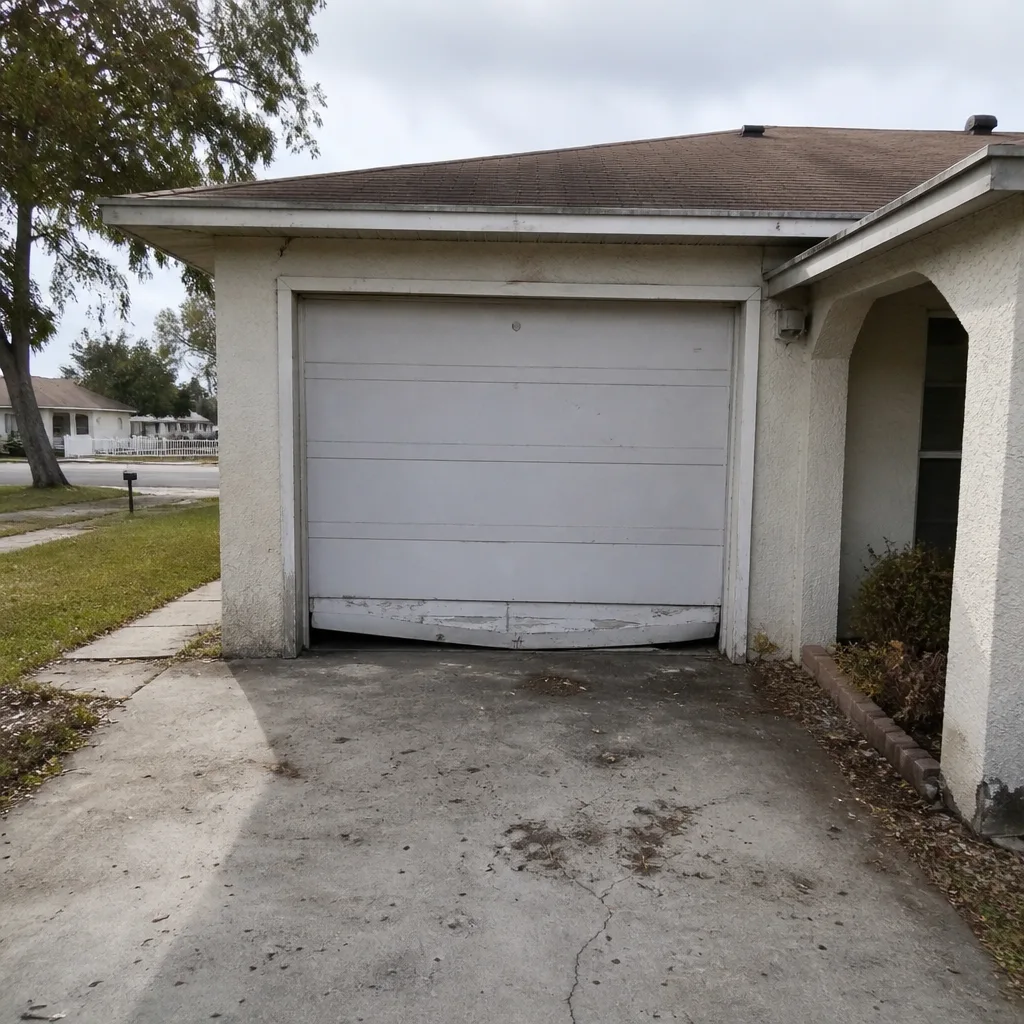 Before
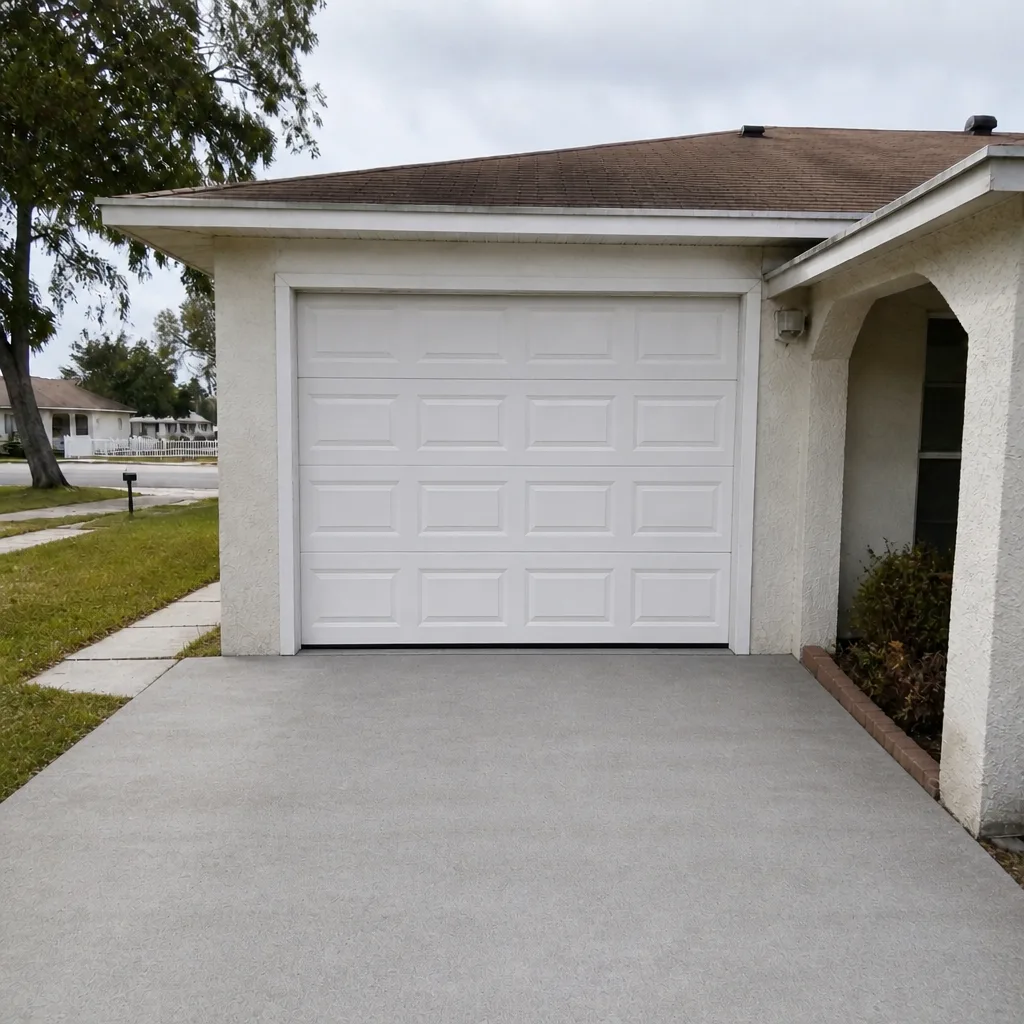 After
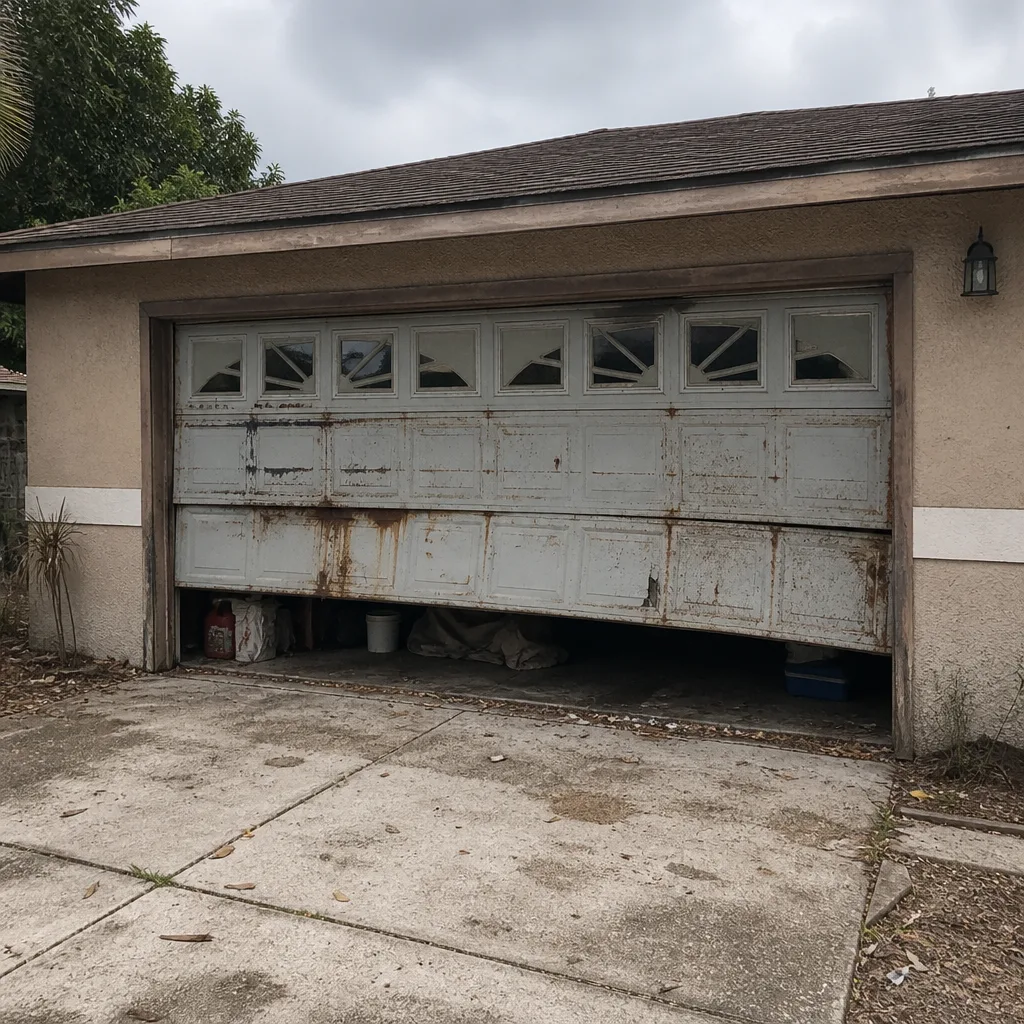 Before
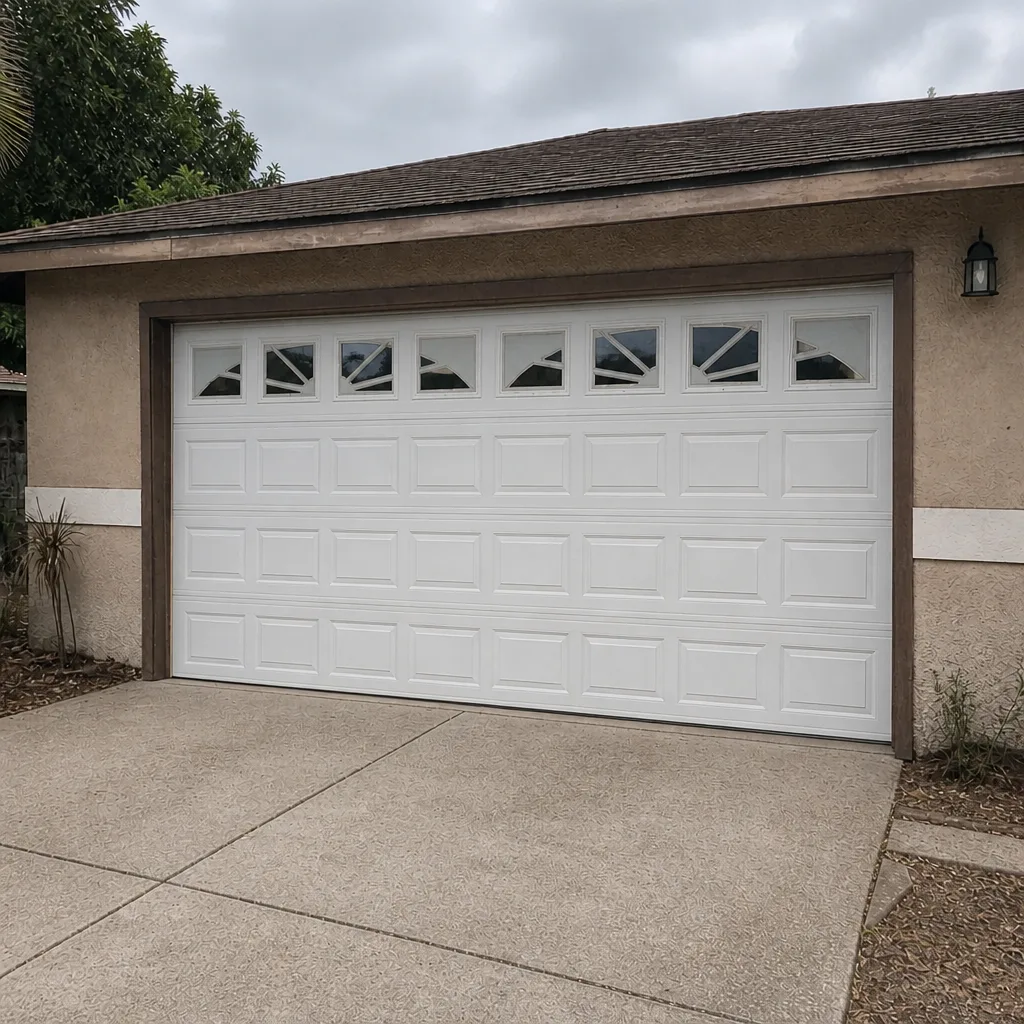 After
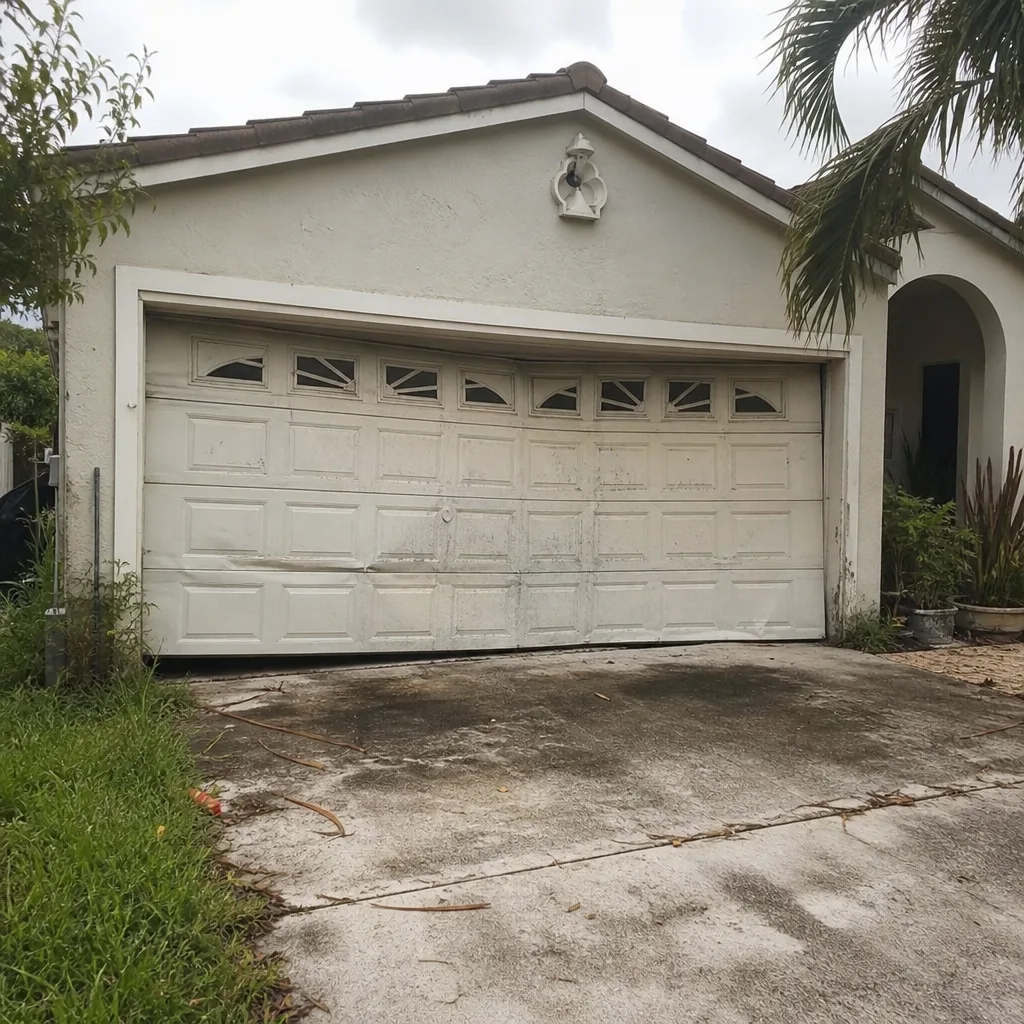 Before
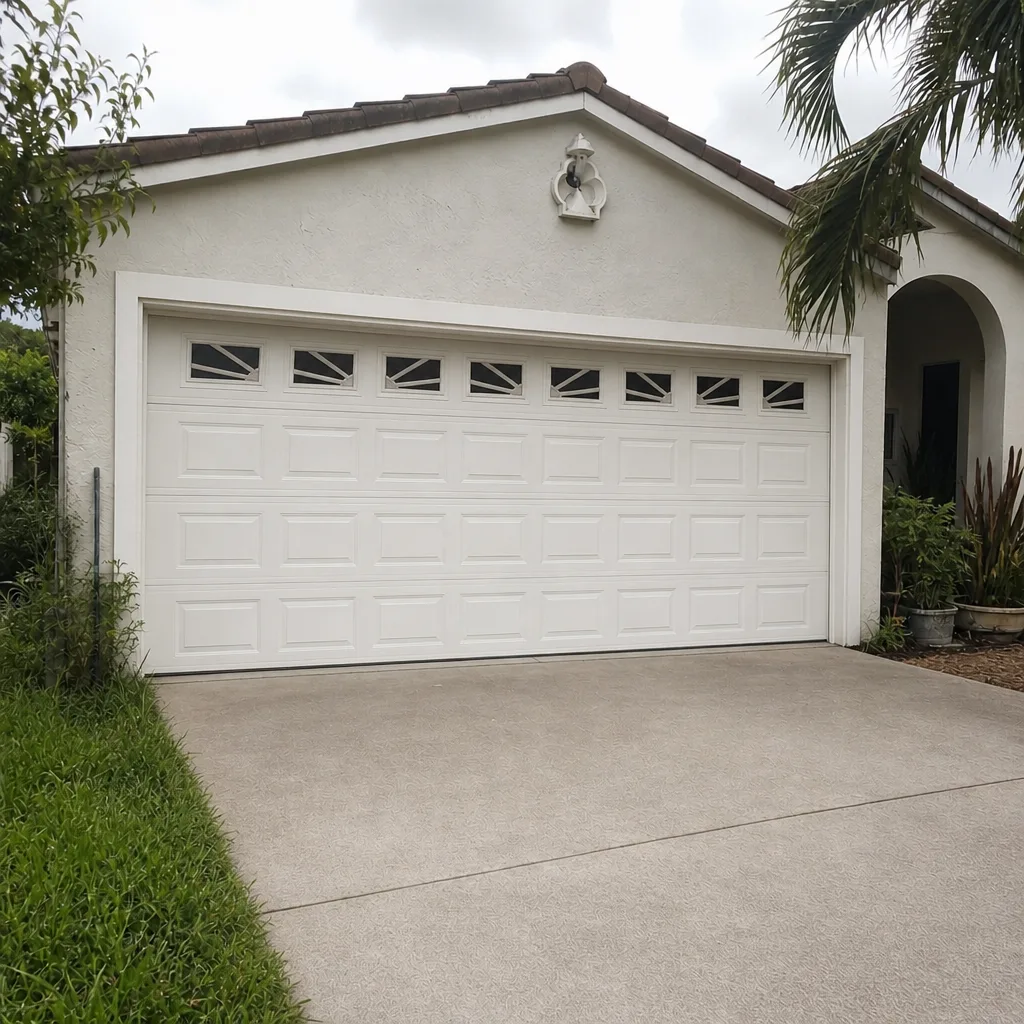 After
When to Call a Professional
Call a professional when the task involves the spring, the cables, the torsion tube, or the bottom bracket. Call when the door is out of balance, when the track is bent beyond a minor deflection, when the opener is behaving unpredictably, or when the repair involves releasing tension on any part of the system. Call when you’re replacing a full door in Miramar, because the permit and product approval requirements make the paperwork as important as the install. And call when the job is on the safe-DIY list but you’d rather not spend the afternoon on it – there’s no prize for doing your own lubrication. Denali Garage Door Repair offers free estimates in Miramar. Call (866) 552-3599. We answer 24/7. Fast dispatch from 7am to 7pm, Sunday through Friday. Our technicians have up to 15 years of experience, and we’re factory-familiar with eight of the most-installed garage door and opener brands, so you won’t hear “we don’t work on that one.”
Frequently Asked Questions
In most cases, no – a full door replacement in Miramar requires a permit and a door with a Florida product approval that meets the wind-load requirements for the area, which means the work needs a licensed contractor. The answer for your specific door depends on the product and the scope, so confirm with the city’s building department before you buy anything. Call (866) 552-3599 for a free estimate on a permitted installation – estimates are free and the price is agreed before work starts.
We strongly advise against it. A torsion spring stores hundreds of pounds of rotational force, and the failure mode when it releases under load is severe injury. Even experienced technicians treat spring replacement as a two-person job with specific tools. Call (866) 552-3599 for a quote – estimates are free.
A single torsion spring replacement typically runs $180 – $340, and a matched pair is usually replaced together, so budget roughly double for a pair. The written estimate sets the final price, and it’s quoted before any work starts. Call (866) 552-3599 for an exact quote – estimates are free.
It can, and it’s worth taking seriously. The garage door is one of the items evaluated during a wind mitigation inspection, and an unpermitted install or a door without the correct product approval can raise questions during a claims review or a home sale. The safest path is a permitted install with the product approval documentation on file. Call (866) 552-3599 to talk through your situation – estimates are free.
Lubrication, safety sensor alignment, remote and keypad programming, weather seal replacement, visual inspection, and track cleaning are all safe for a homeowner. These tasks don’t involve stored spring energy or structural work, and they cover most of the routine maintenance a door needs. For anything involving springs, cables, or structural components, call (866) 552-3599 – estimates are free.
In many cases yes – same-day service is available for repair calls, and our technicians have up to 15 years of experience diagnosing doors that won’t move. Call (866) 552-3599. We answer 24/7. Fast dispatch from 7am to 7pm, Sunday through Friday. If a call comes in outside dispatch hours, it’s booked into the next opening.
The Bottom Line
The DIY-versus-professional decision for a garage door isn’t about skill. It’s about stored energy, local code, and insurance exposure. Lubrication, sensors, remotes, weather seals, and visual inspections are genuinely yours to handle. Torsion springs, cables, and structural work belong to someone trained for the risk. Full door replacement in Miramar needs a permit and a Florida product approval. If you’re unsure which side of the line a job falls on, call and ask before you start – a free estimate is cheaper than a mistake. For expert help with any garage door or opener in Miramar, reach out and we’ll get you a clear answer.
Ready to stop guessing and get a real number? Call Denali Garage Door Repair at (866) 552-3599 for a free estimate. We answer 24/7. Fast dispatch from 7am to 7pm, Sunday through Friday. Whether you need garage door opener repair or a full replacement, we’ll quote the job in writing and agree the price before any work starts.
Written by the team at Denali Garage Door Repair.